
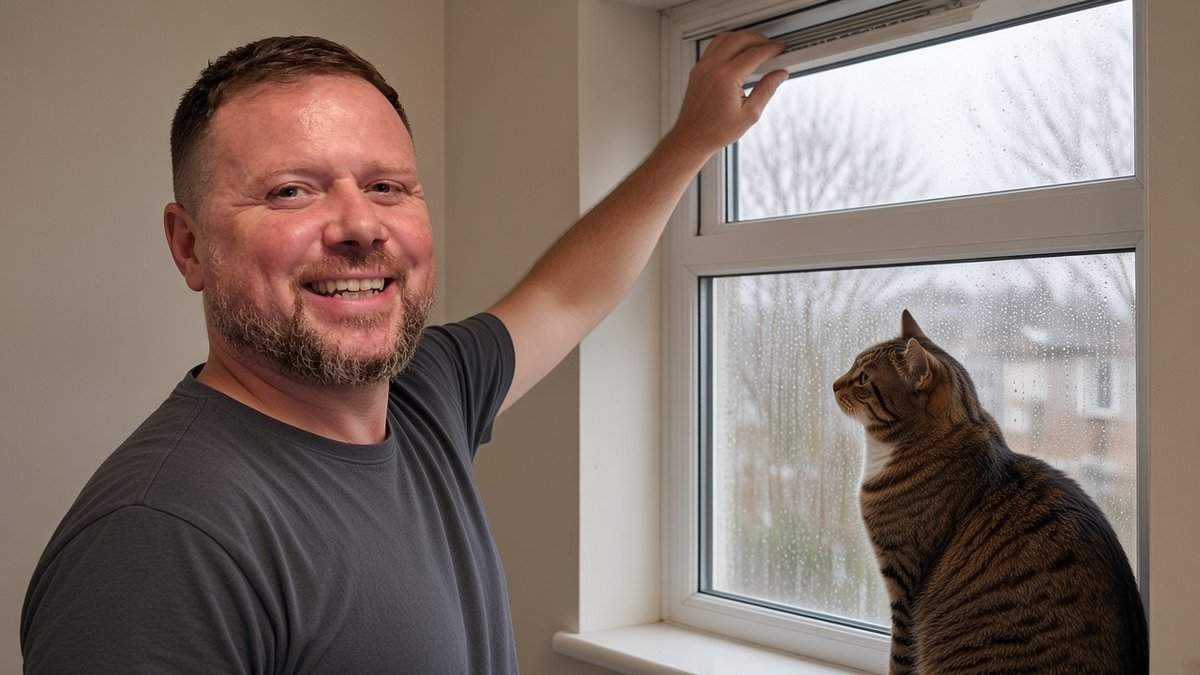
November in Swindon has a routine. The heating comes on, the windows go shut, and every morning the glass is running with water. The sills get wet, the black specks start in the corners of the frames, and the curtains feel damp at the bottom.
Most of the time this is everyday condensation: warm, moist air from breathing, cooking, showers and drying clothes hitting cold glass. It isn't a disaster, but left alone it rots timber sills, stains plaster and lets mould get a start. Here is what you can do yourself, and what's worth getting a handyman in for.
First: is it condensation or something else?
Condensation forms on the room side of the glass, mostly first thing in the morning, and it's worst in bedrooms, kitchens and bathrooms.
If the water is between the two panes, the sealed unit has failed. That's a glazing job, not a ventilation one.
If you've got a damp patch on the wall around the window, especially after rain, that can be water getting in from outside. I've written about that in penetrating damp around windows.
The daily habits that make the biggest difference
None of these cost anything, and together they usually make the biggest dent:
- Wipe the glass and sills every morning. A squeegee or microfibre cloth, then wring it out in the sink. Don't leave the water to soak into the sill.
- Open the trickle vents and leave them open. More on those below.
- Lids on pans and the extractor on when cooking. Leave it running for a bit after.
- Shower with the extractor on and the door shut, then crack the window for a few minutes afterwards.
- Dry washing outside or in one closed room with the window slightly open, not on radiators across the house.
- Keep furniture a few centimetres off outside walls, and don't trap the window behind thick curtains all night with the heating off.
- Keep a steady low heat rather than freezing the house all day and blasting it in the evening.
Trickle vents: the small slot that does a big job
Most uPVC windows from the last couple of decades have a trickle vent: a narrow slot with a sliding cover along the top of the frame. It lets a small, steady amount of air in without opening the window.
The problem is that people close them in autumn to stop draughts, or they've been painted over, clogged with dust and dead flies, or the cover has snapped.
Quick check:
- Slide the cover open. If it won't move, or it's missing, it needs a fix.
- Look through the slot. You should see daylight or the outer grille, not a solid block of muck.
- Clean it out with a soft brush or the vacuum's brush nozzle. Don't poke anything sharp into the outer weather hood.
If a room has no vents at all and the condensation is bad every day, it's worth having that looked at properly rather than living with it.
Protect the sills and seals
Constant water is what does the damage, so it's worth checking:
- Timber sills: soft spots, peeling paint or black staining at the joints mean water is getting in. Small areas can often be dried, filled and repainted. Rotten sections may need cutting out and replacing.
- Silicone along the sill and frame: cracked or black silicone lets water creep behind. Rake it out and reseal.
- Window seals and hinges: a window that doesn't close tight lets cold air chill the frame and makes condensation worse. Sticking or sloppy handles are often an adjustment, not a new window. See window handle problems.
On black mould spots: clean them with a suitable mould product, following the label, and keep the area dry. If it keeps coming back across a whole wall or ceiling, the cause needs finding, and that's a job for a specialist survey rather than another spray.
What I can do in a booking
In a Handyman Plus Van session I can typically:
- free off, clean or replace broken trickle vent covers where parts are available,
- adjust uPVC windows that don't close tight, and sort sticking handles and hinges,
- rake out and reseal mouldy or cracked silicone around sills and frames,
- repair, fill and repaint tired timber sills, or replace a rotten section,
- check and refit draught strip so the cold air stays out.
How long it takes depends on what we find, so it's worth putting a few of these on one list. Small bits from van stock typically aren't charged. Bigger materials go on the invoice at cost, with a limit on how much I buy in. I don't take rubbish away. Structural problems, failed sealed units and full damp surveys go to the right specialist.
Three-hour sessions cover Swindon. Full-day bookings reach about a 30-minute radius around Swindon.
There's more detail on the services side at window mechanism repairs and damp proofing.
Get it sorted before the worst of winter
If your windows are streaming every morning and the sills are starting to suffer, make a booking online for a three-hour session, or book a full day if you've got a longer list. You can also WhatsApp 07729 689420.
More condensation tips on the blog: https://iancroasdell.wordpress.com/2026/10/22/how-to-stop-condensation-on-windows/
