
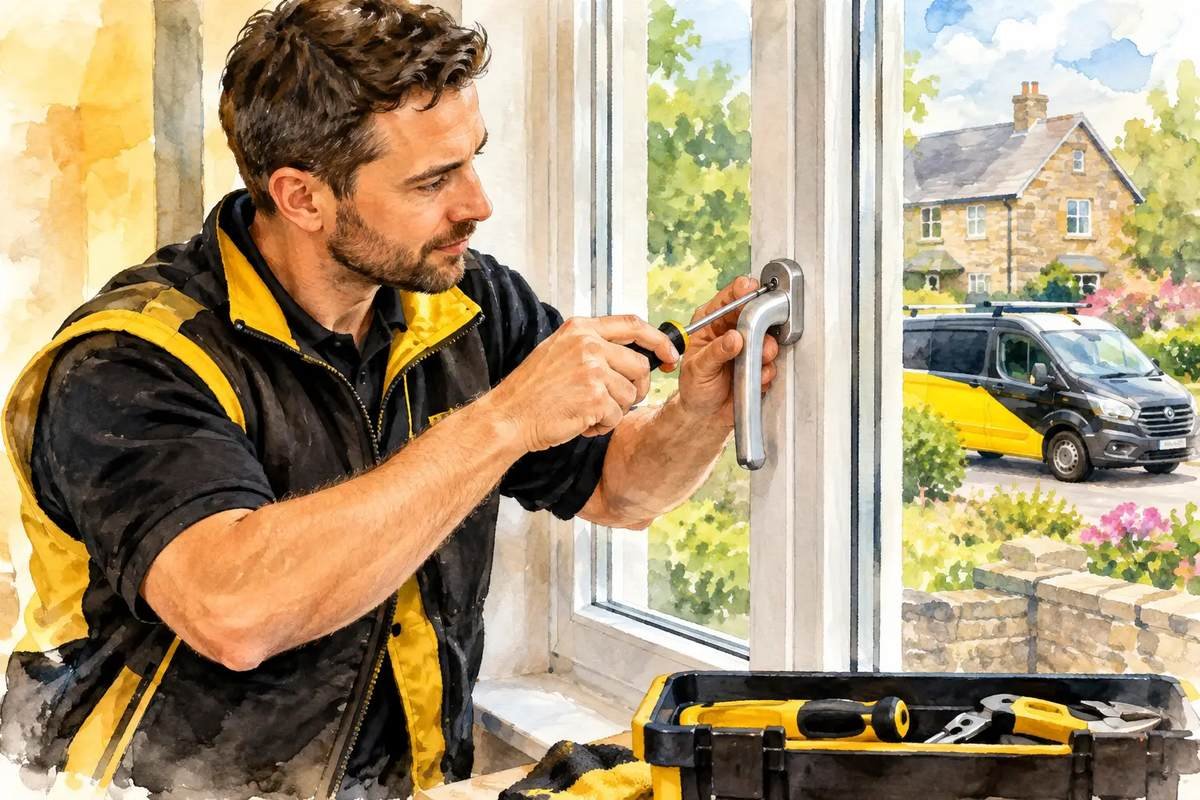
A window that will not lock, open or close properly can quickly become more than an annoyance. Window handle problems often point to a worn mechanism, a misaligned sash or a build-up of paint and dirt - and forcing the handle is one of the quickest ways to turn a repairable fault into a bigger job.
For homeowners and landlords, the sensible approach is to work out what the handle is telling you. Some faults need little more than careful cleaning and adjustment. Others need a replacement handle or internal locking mechanism. No judgement, no drama - just a few practical checks before deciding what to do next.
Start with the symptom, not the handle
The handle is the part you can see, but it is rarely the whole system. On many modern uPVC windows, turning the handle moves a long locking strip inside the window edge. This engages mushroom cams or locking points around the frame. If the window is under pressure, poorly aligned or mechanically worn, the handle may feel stiff even when the handle itself is perfectly sound.
Before trying to fix anything, notice exactly what happens. Does the handle turn but fail to lock? Is it stuck in one position? Does the window open but refuse to close flush to the frame? Or has the handle become loose and wobbly? These clues narrow down the likely cause and help avoid unnecessary replacement parts.
The handle feels stiff or will not turn
A stiff handle is commonly caused by the window not sitting squarely in its frame. Over time, opening sashes can drop slightly on their hinges, particularly on larger or frequently used windows. The locking points then meet the keeps on the frame at the wrong angle, creating resistance when you try to turn the handle.
First, try gently lifting the opening sash towards the hinge side while turning the handle. If it moves more easily, alignment is probably part of the problem. Do not lean your full weight on the window or wrench the handle. A tight mechanism can snap internally, and broken parts are harder to match once the window is shut.
Dirt, old paint and lack of lubrication can also make moving parts stiff. With the window open, inspect the metal locking strip around the sash edge. Carefully remove loose dirt and apply a small amount of suitable light lubricant to moving metal parts. Keep lubricant away from the glass, seals and any painted finish. If the mechanism remains tight, it may be worn or damaged rather than merely dry.
The handle turns, but the window does not lock
If the handle turns freely without pulling the sash tightly into the frame, the internal gearbox or espagnolette mechanism may have failed. This is a common issue with uPVC casement windows. The handle is still moving, but the locking strip is no longer travelling as it should.
Check the edge of the opening sash while someone slowly turns the handle. If the locking cams do not move, or only some of them move, the mechanism is likely at fault. Replacement is often possible, but it is important to identify the correct type and length before removing anything. Similar-looking window mechanisms can have different backsets, fixing positions and locking-point arrangements.
On older timber or aluminium windows, a handle may operate a simpler catch rather than a full multipoint lock. A worn keep, loose fixing screws or a swollen painted surface may be the real cause. The repair depends on the construction of the window, not just the style of handle.
The handle is loose or spins around
A loose handle may simply have loose screws behind its cover plate. Most modern handles have a small plastic cover that rotates or lifts to reveal the fixings. Tighten the screws carefully by hand. Overtightening can strip the fixing holes, especially where the handle is mounted into older timber.
If the handle still feels loose after the screws are secure, the square spindle may be worn, too short or broken. The spindle is the metal bar that connects the handle to the locking mechanism. Replacing a handle can be straightforward when the mechanism is working, but measurements matter. The spindle length, screw-centre distance and handle type all need to match.
A handle that spins without operating the lock is more likely to indicate a damaged spindle or failed gearbox. Avoid repeatedly turning it in the hope that it will catch. That can leave the window stuck open or locked shut at an inconvenient time.
Common causes of window handle problems
Window faults tend to develop gradually, even if the final failure feels sudden. The usual causes are everyday wear, slight movement in the window, moisture and previous repairs that have not dealt with the underlying issue.
On uPVC windows, dropped hinges and worn locking gear are regular culprits. In timber windows, seasonal expansion, paint build-up and movement in the frame can stop a catch lining up properly. Condensation and damp conditions can also affect metal components over time, particularly where a window has not been opened regularly.
It is worth checking whether the problem started after decorating. Fresh paint around a sash edge, catch or frame can create enough friction to make a window difficult to operate. Likewise, replacement seals that are too thick can make closing unusually tight. The answer is not always to cut away material or force the handle - the fit should be assessed properly first.
What you can safely check yourself
A few simple checks can help you understand the fault without dismantling the window. Open the window if possible and look for obvious debris, loose screws, damaged handle covers and locking points that do not move. Check whether the sash appears to be rubbing against the frame, especially at the lower corner opposite the hinges.
You can also test the handle with the window open. On some uPVC windows, there is a small spring-loaded catch on the sash edge that must be held in before the handle can turn fully. This is part of the safety mechanism, not necessarily a fault. Keep fingers clear of hinges and locking points while testing it.
Do not remove a handle from a closed window unless you know the locking mechanism is functioning. If the spindle or gearbox is failing, taking parts apart can make it harder to secure the window afterwards. Equally, avoid drilling, forcing a screwdriver into the mechanism or using pliers on the handle. These shortcuts regularly cause damage to the sash, frame or glass seal.
When a repair is the sensible option
A replacement handle is usually worthwhile when the existing mechanism works correctly and the fault is isolated to the handle, spindle or fixings. Adjustment may be enough where the sash has dropped slightly but the locking system is otherwise sound.
A new locking mechanism may be needed if the handle turns but the locking points do not travel, the gearbox has seized, or the window cannot be locked securely. This is a more involved repair because the existing strip needs to be matched, removed and fitted without damaging the window.
Sometimes the issue is not economical to treat as a small repair. A badly warped timber sash, extensive rot around fixings or a failed sealed unit alongside a damaged mechanism may need a wider assessment. It depends on the age, type and overall condition of the window. A good repair should solve the reason the handle failed, rather than just make it look better for a few weeks.
Preparing for a professional visit
If you need help, take a clear photograph of the handle, the sash edge and any visible locking strip with the window open. Note whether the window is uPVC, timber or aluminium, and whether it is stuck open, shut or simply difficult to operate. This makes it easier to plan the right repair and source appropriate parts if needed.
For a property with several small maintenance jobs, a faulty window mechanism can often be added to a planned handyman visit alongside other suitable repairs. At Handyman Plus Van, I will assess the window carefully, explain what has failed and be clear if a part, further visit or specialist replacement is needed. There is no benefit in guessing with security-related repairs.
A window should close cleanly, lock without a fight and open when you need ventilation. If yours is resisting, deal with it while it is still a manageable repair - before a reluctant handle becomes a window you cannot secure.
Want to book?
I'm a one-man handyman service in Swindon — insured, DBS checked, and rated 4.9 on Google. 3-hour sessions cover Swindon (town); full days cover about 30 minutes around Swindon.
Book a session, or message me free on WhatsApp on 07729 689420. If you'd rather talk it through first, you can book a paid 20-minute video call.
