
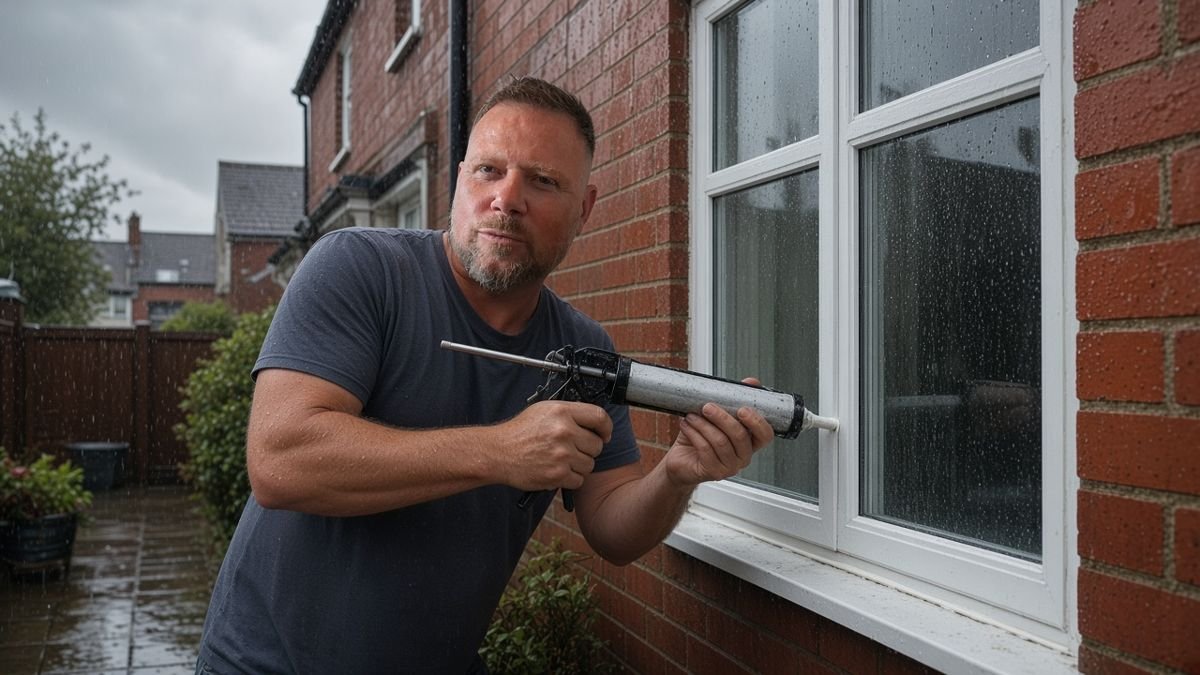
Autumn rain has a way of finding the weak spots in a house. In Swindon, one of the most common is the gap around a window frame. A patch of damp appears beside or below the window a day or two after heavy rain, fades in a dry spell, then comes back with the next downpour.
That pattern matters. It usually means water is getting in from outside (penetrating damp), not condensation from inside. The good news is that many of these leaks have small, fixable causes.
Is it penetrating damp or condensation?
A few signs point to rain getting in:
- the patch is on an outside wall, often at a window corner or under the sill
- it gets worse after wind-driven rain and improves when the weather is dry
- the plaster feels damp in one defined area rather than across a whole cold wall
Condensation tends to show up differently: water on the glass in the morning, black spotty mould in cold corners and behind furniture, and problems that get worse when washing is dried indoors.
A simple check is to tape a square of kitchen foil tightly over the patch and leave it for a day or two. Moisture on the room side suggests condensation. Moisture behind the foil suggests it is coming through the wall.
The common causes around windows
From the ground, look at the outside of the window behind the damp patch:
- Failed sealant. The flexible seal between the frame and the brickwork cracks, shrinks or peels away over the years, leaving a gap rain can run into.
- A blocked or missing drip groove. The groove under the sill makes water drop clear of the wall. Paint, moss or dirt can bridge it so water tracks back underneath.
- Tired pointing. Missing or crumbling mortar around the window opening lets water soak into the brickwork.
- Overflowing gutters above. A blocked gutter can pour water straight down the wall onto the window head.
What I can do
I'm Ian, and I run Handyman Plus Van in Swindon. I take on penetrating damp jobs that come down to:
- cutting out old, failed sealant around window frames and resealing with a suitable exterior sealant
- clearing and checking drip grooves under sills
- small areas of repointing around openings
- checking the area once it is dry, so the inside can be redecorated with confidence
All of this is within my ladder limit of 5m. Sealant needs a dry surface and the right temperature to cure, so the weather on the day does matter, and I'll tell you straight if conditions aren't right.
What needs a specialist
Some causes are outside what I do, and it's better to say so at the start:
- roofs, chimneys and flashing
- render repairs and anything above 5m
- cracks that are wide, growing or look structural, which need a qualified surveyor (the RICS firm finder lists them)
- damp that can't be traced to a clear cause, where a damp specialist is the right call (the Property Care Association lists members)
If the damp is near sockets, switches or light fittings, don't touch anything wet and get a registered electrician. Electrical Safety First has clear guidance on water and electrics.
Before you book
To get the most out of a session, it helps to send:
- a photo of the damp patch inside
- a photo of the outside of the same window
- a list of any other jobs you'd like done in the same visit
I'm booked in 3-hour or full-day sessions. Resealing is often one item on a longer list, and I'll do my best to get the list done in the time booked. I'm insured, DBS checked and rated 4.9 on Google.
Ready to get it sorted before winter settles in? Make a booking or message me free on WhatsApp on 07729 689420. For the do-it-yourself detective version, with a full suspect line-up, see my blog post Damp Patch on the Wall After Rain?
