
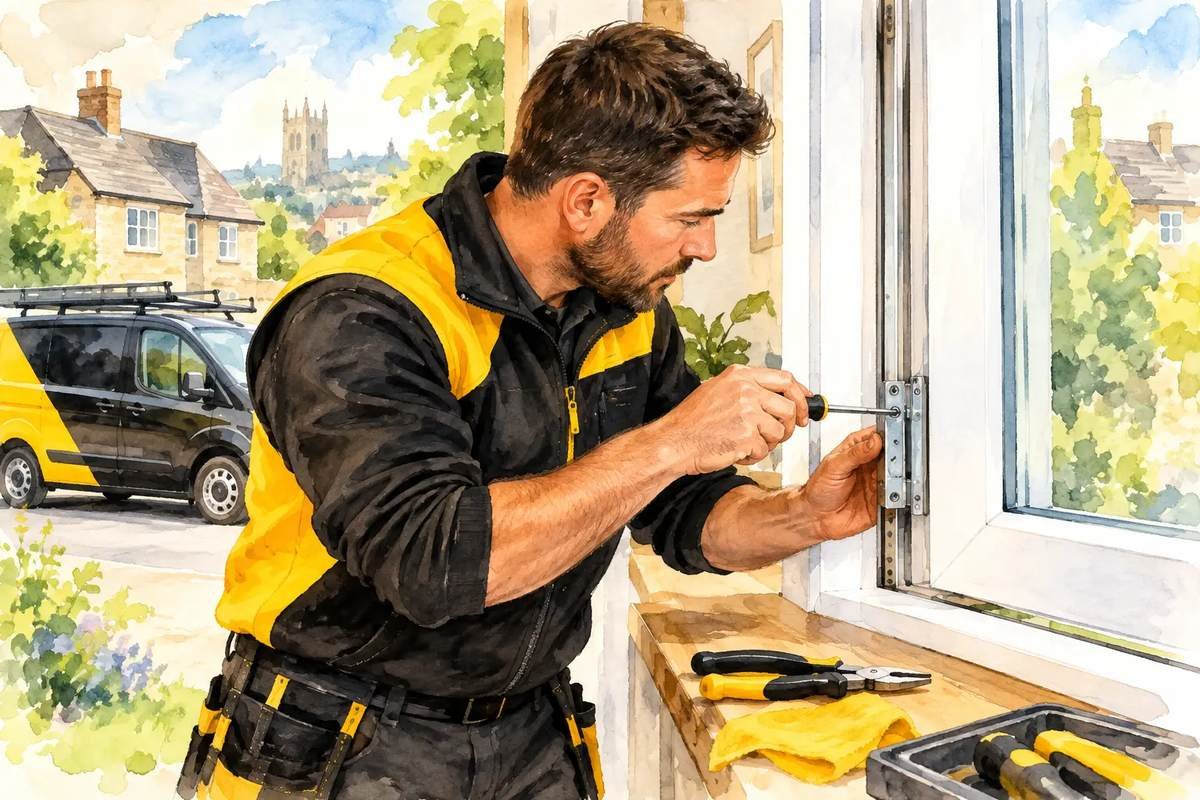
A window that catches, drops when opened or lets in a cold draught is often blamed on the handle or the frame. Quite often, though, the hinges are the real issue. Knowing how to repair window hinges starts with identifying what type of hinge you have and whether it needs cleaning, adjustment or replacing.
The good news is that many hinge faults are manageable. The less good news is that forcing a misaligned window can damage the locking mechanism, crack a sealed unit or pull fixings from the frame. A careful check before reaching for a screwdriver saves time and a bigger repair.
Start by finding the cause of the problem
Open and close the window slowly, watching where it catches. If it scrapes along the frame, leaves a gap on the hinge side or needs lifting to engage the handle, the sash may have dropped or the hinges may be worn. If it feels stiff throughout its movement, dirt, corrosion or dried lubricant may be to blame.
Look closely at the hinge arms and fixing screws. Rust, bent metal, loose screws and black residue around the moving parts are all useful clues. On uPVC casement windows, the most common type is a friction stay hinge: two slim metal tracks fitted between the opening sash and the fixed frame. Timber windows may have traditional butt hinges, while some composite doors and windows use adjustable flag-style hinges.
Before doing anything else, check that the problem is definitely mechanical. A swollen timber sash after damp weather, a warped frame or a failed double-glazed unit can make a window appear to have a hinge fault when the underlying cause is elsewhere.
Clean and lubricate stiff window hinges first
A hinge that is otherwise sound may simply need a proper clean. Open the window as far as it will safely go and use a vacuum with a narrow nozzle or a soft brush to remove dust, grit and dead insects from the tracks. Wipe the exposed metal with a clean cloth.
Apply a small amount of suitable light lubricant to the pivot points and sliding channels, then work the window gently several times. Use only enough to free the movement. Excess oil attracts dirt and can soon turn into a sticky paste.
Avoid coating the whole hinge or spraying lubricant onto nearby seals. It will not cure worn hinge tracks, and some products can mark uPVC or affect rubber gaskets. If the window improves immediately but begins binding again within days, the hinge is likely worn rather than merely dry.
How to repair window hinges by tightening and adjusting
If the window is loose but the hinge itself looks straight and intact, check the screws first. With the window shut, inspect the screws around the sash and frame. Tighten any that have worked loose, taking care not to overtighten them. A screw turning without gripping is a sign that the fixing hole has enlarged, particularly in older timber frames.
On a timber window, a loose screw may sometimes be repaired by removing it, filling the hole with a glued timber plug or suitable repair material, allowing it to cure, then drilling a small pilot hole before refitting. This only works if the surrounding timber is dry and sound. Soft, rotten timber needs a more considered repair, not a larger screw forced into place.
Some modern hinges have adjustment screws that move the sash slightly up, down or sideways. These are more common on certain window and door hinge systems than on standard friction stays. Make small changes only - usually a quarter turn at a time - and test the window after each adjustment. It is easy to chase the alignment in the wrong direction if several screws are altered at once.
A useful rule is to mark the starting position with a pencil or take a clear photograph before making changes. That gives you a way back if the window closes worse rather than better.
When friction stay hinges need replacement
Friction stay hinges do wear out. The tracks can distort, the rivets can loosen and the arms can develop play. A common symptom is a window that has dropped on the handle side, leaving a visible gap at the top or bottom of the frame. Another is a hinge that feels rough, clicks or will no longer hold the window in its normal open position.
Replacement is usually more sensible than trying to straighten a bent friction stay. The important part is getting the correct size and handing. Measure the hinge track length from end to end, note its general shape and check whether it is top-hung or side-hung. On many windows, both hinges should be replaced together so the sash is supported evenly.
This is a two-person job in many cases. Once the old hinges are detached, the opening sash can become awkward and unstable. Larger panes are heavier than they look, and an unsecured window can swing, drop or damage the surrounding frame. If you are not comfortable supporting the sash safely while working, it is sensible to leave the replacement to a professional.
The basic replacement process
With the window open and properly supported, the old hinges are unscrewed from the sash and frame. The new hinges are positioned in the same orientation, using the existing holes where they remain secure. The sash is then checked for level before all screws are fully tightened.
This sounds straightforward, but alignment matters. Even hinges that are only a few millimetres out can make the handle hard to operate or leave the weather seal compressed unevenly. Do not use the locking handle to pull a poorly aligned sash into place. That puts unnecessary strain on the gearbox and espagnolette locking strip.
If the screws will not hold, the frame is damaged, or the hinge positions do not match the originals, stop there. The job may need a repair to the substrate, a different hinge specification or investigation of a wider window fault.
Check the seals and locking action afterwards
A repaired window should close without lifting, forcing or slamming. Run your hand around the inside edge on a breezy day to check for obvious draughts, or place a thin strip of paper between the sash and frame before shutting it. It should grip the paper with light resistance around the perimeter.
Also test the handle gently. It should turn smoothly when the sash is fully home. If it is stiff only when the window is closed, alignment is still likely to be the issue. If it is stiff in every position, the locking mechanism may need attention as well.
Do not ignore condensation, staining or softness around the frame while checking the hinges. Water getting past a failing seal can create a bigger maintenance issue over time, particularly around timber windows.
When it is better to call in a handyman
A hinge repair is a good candidate for professional help when the sash is heavy, the window is above ground level, the frame shows signs of damage, or the fault involves both hinges and the locking mechanism. It also makes sense when the repair is one item on a wider household list. Sorting a sticking window alongside small carpentry, sealing or maintenance jobs can be a more efficient use of a booked visit.
For homeowners and landlords in Swindon, Handyman Plus Van can assess common window mechanism and hinge problems as part of a planned maintenance visit. There is no judgement if you have already had a go - a clear description, a few photographs and an honest account of what the window is doing are usually the best starting point.
A small fault is worth dealing with early
Window hinges rarely improve by themselves. What begins as a slight scrape or a draught can become worn locks, damaged seals and a window that no longer closes securely. Give the hinges a clean, make only measured adjustments, and replace worn parts rather than forcing them to carry on. A window should shut comfortably and keep the weather where it belongs - outside.
Want to book?
I'm a one-man handyman service in Swindon — insured, DBS checked, and rated 4.9 on Google. 3-hour sessions cover Swindon (town); full days cover about 30 minutes around Swindon.
Book a session, or message me free on WhatsApp on 07729 689420. If you'd rather talk it through first, you can book a paid 20-minute video call.
