
Welcome to Britain in late autumn.
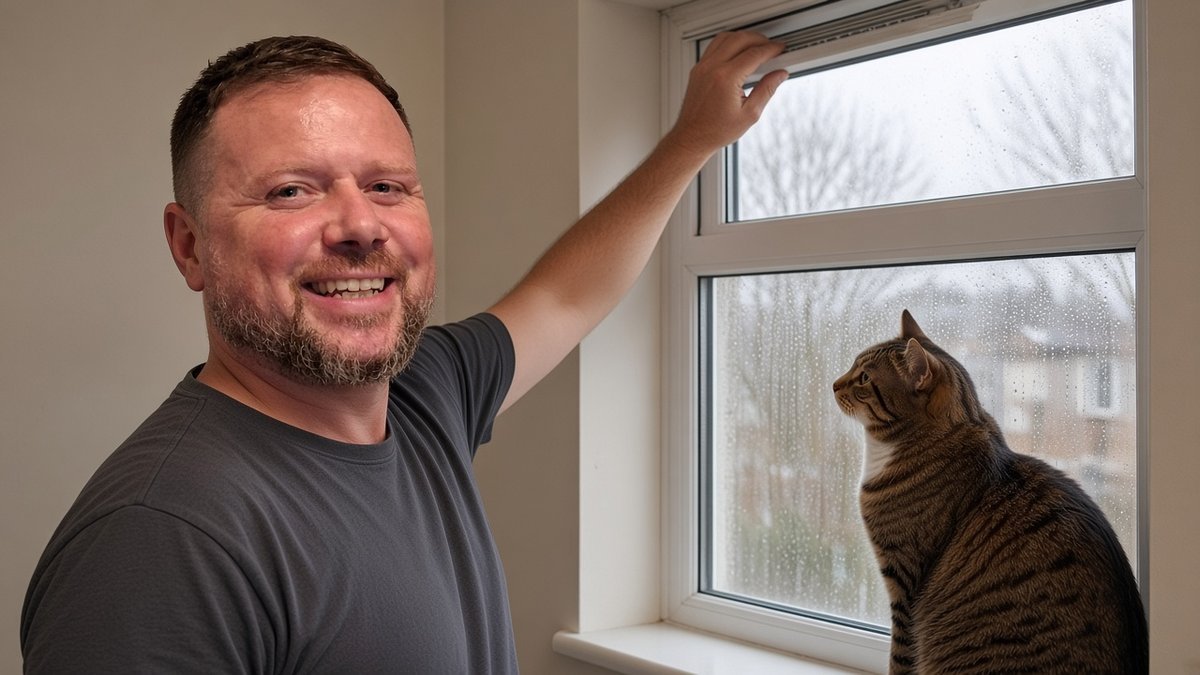
Heating on. Windows shut. And every morning the glass looks like someone ran a hosepipe down it.
Most of that is everyday condensation: warm, moist air from breathing, cooking, showers and drying clothes hitting cold glass. It isn't a disaster on day one. Left alone, though, it feeds damp and mould — and that is worth taking seriously.
Why I bother
This is the first in a new series I'm calling Watch out for this. Short, practical home tips for Swindon. No scare stories. Just things I tell customers when I'm in their houses.
The NHS used to answer "Can damp and mould affect my health?" head-on. That page now points to the official GOV.UK guidance, written with the UK Health Security Agency after the death of Awaab Ishak. It is clear: damp and mould mainly affect the airways and lungs. They are linked to cough, wheeze, shortness of breath, respiratory infections, and the development or worsening of asthma and allergies. They can also irritate the eyes and skin, including eczema. Children, older adults and people with existing health conditions or a weakened immune system are at greater risk.
I am not a doctor. If you are worried about symptoms, speak to a GP. I am a handyman who sees wet windows every winter. Better to catch the moisture early than live with black specks in the corners for months.
My daily rule of thumb
Get a humidity sensor. A small digital hygrometer. Stick one in the bedroom, and another in the kitchen or bathroom if you can.
I tell customers: if it goes above 70%, open a window.
That 70% figure is my own rule of thumb from jobs around Swindon, not an official NHS or GOV.UK threshold. Official guidance flags consistently high humidity as a risk and recommends a moisture meter. The sensor just makes the invisible visible.
When the reading climbs, crack a window for a few minutes. Better a short blast of fresh air than a room that stays muggy all day.
Practical steps that actually help
None of these need a van full of tools:
- Lids on pans and the extractor on when you cook. Leave it running a bit after.
- Extractor on for showers, door shut, then a short window open afterwards.
- Trickle vents open — that little slot at the top of many uPVC windows.
- Dry washing outside if you can, or in one closed room with the window ajar — not on every radiator.
- Wipe the glass and sills each morning so water does not soak into timber or silicone.
- Leave a gap behind furniture on outside walls so air can move.
- Keep a steady low heat rather than freezing the house all day and blasting it at night.
If mould keeps coming back across a whole wall or ceiling, the cause needs finding. That is a specialist survey, not another spray.
More on vents and sills: condensation on windows and trickle vents in Swindon.
Sources worth reading
- GOV.UK damp and mould health guidance — co-developed with UKHSA; the NHS damp-and-mould page now redirects here
- UKHSA: the burden of disease from damp and mould in English housing
- Damp and mould in the home (Manchester University NHS Foundation Trust) — includes the tip to use a humidity meter
Need a hand?
If the vents are stuck, the seals are shot or the sills are soft, make a booking for a three-hour session in Swindon. Structural damp and failed sealed units go to the right specialist.
Watch out for this. A little sensor on the sill beats another winter of wet windows.
