
You can't see it. You can't smell it. And you can't taste it either.
That's carbon monoxide. The NHS is blunt about it: it is a poisonous gas made by fires and appliances that burn gas, wood, oil or coal. If they are faulty, badly fitted or poorly maintained, it can build up indoors — and you would not know it was there.
Winter makes this worth a two-minute check. Heating on. Windows shut.
Why I bother
This is the second in a series I'm calling Watch out for this. Short, practical home tips for Swindon. No scare stories.
The NHS lists the warning signs as a headache, dizziness, feeling sick or being sick, feeling weak, tiredness and confusion, chest and muscle pain, shortness of breath, a hot flushed face, and loss of vision. The symptoms may come and go. They may get worse in one room and ease when you go outside.
I am not a doctor. If you are worried about symptoms, call NHS 111. If someone is finding it hard to breathe, has suddenly become confused, has lost consciousness, feels weak, or has chest or muscle pain, call 999 or go to A&E — and do not drive yourself.
I am a handyman. I do not do gas work. Not boilers, not fires, not cookers. That is a job for a Gas Safe registered engineer.
My winter rule of thumb
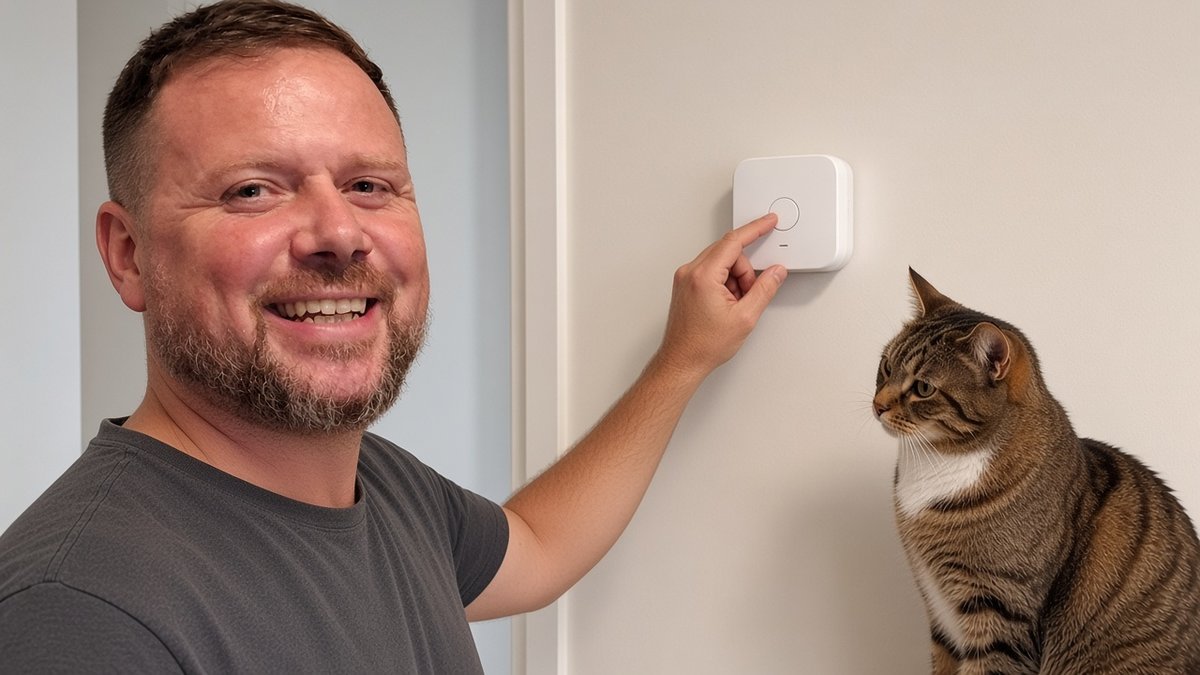
Test your carbon monoxide alarm.
Press and hold the test button until it sounds. Fire services say do this at least once a month. If it does not sound, check or replace the batteries. If it still stays quiet, replace the alarm.
No alarm yet? A battery one is a job you can do yourself. Follow the instructions in the box. Official guidance, in general, is to put it at head height on a wall or a shelf, about 1 to 3 metres from the appliance. Look for BS EN 50291 and a Kitemark. An alarm is a back-up, not a substitute for getting the appliances checked.
Rather not do it yourself? I can fit battery carbon monoxide alarms as part of a booked session.
Practical steps that actually help
- Test every carbon monoxide alarm once a month — the same day you test the smoke alarms is an easy habit.
- Fit a battery alarm in every room with a fuel-burning appliance, if you have not already. Mains-wired units need a qualified electrician. I don't do those either.
- Leave vents and flues alone. Don't block air bricks or appliance vents.
- Get gas appliances checked every year by a Gas Safe registered engineer. The Health and Safety Executive advises this for all gas customers, not only tenants.
- If you rent, your landlord must equip a carbon monoxide alarm in any room used as living accommodation that contains a fixed combustion appliance, except a gas cooker. That is how GOV.UK sets out the Smoke and Carbon Monoxide Alarm (Amendment) Regulations 2022. If an alarm is faulty, tell the landlord.
If an alarm goes off, or you think a gas appliance is leaking carbon monoxide, get out and call the Gas Emergency number 0800 111 999. Official advice is also to stop using the appliance if you can, and to open doors and windows. Get medical advice, and do not go back in until you have been told it is safe. Have the appliances checked by a Gas Safe registered engineer before you use them again. Not your mate. Not me.
First in this series: Watch out for this #1: condensation — get a humidity sensor.
Sources worth reading
- Carbon monoxide poisoning (NHS)
- GOV.UK guidance on the 2022 smoke and carbon monoxide alarm rules for landlords
- HSE carbon monoxide advice and HSE leaflet INDG238 (PDF)
- UKHSA: how to protect your home from carbon monoxide
- Carbon monoxide (Dorset & Wiltshire Fire and Rescue)
- How to test a carbon monoxide alarm (Devon and Somerset Fire and Rescue)
Need a hand?
I don't work on boilers, fires or cookers. For anything gas, find a Gas Safe registered engineer.
If you've got other winter jobs that are not gas or electrics, make a booking for a three-hour session in Swindon.
Watch out for this. A two-minute test this weekend beats wondering all winter.
