
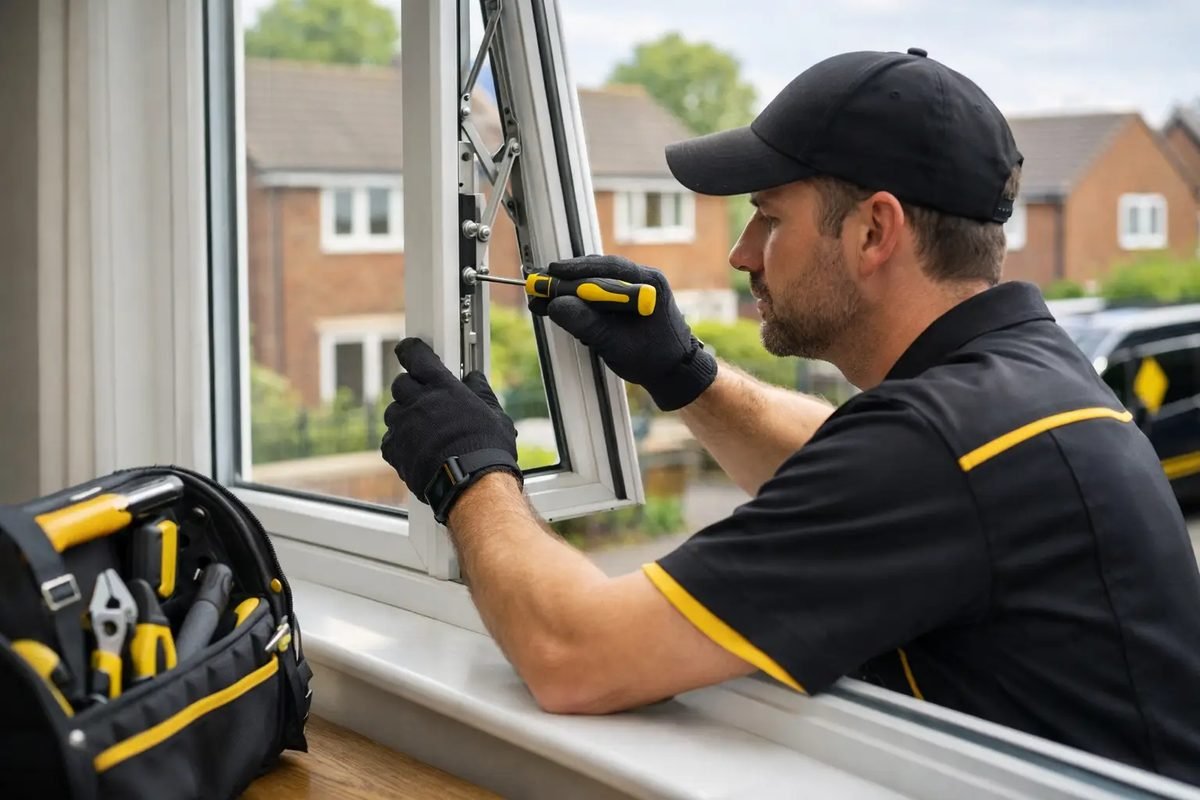
A window that will not shut properly is more than an annoyance. It can leave a room draughty, make the handle difficult to use and, in some cases, affect how securely the window closes. Window mechanism repair Swindon homeowners can rely on starts with working out what has actually failed - not forcing a stiff handle and hoping for the best.
Most window problems develop gradually. The handle needs an extra push, the sash catches on the frame, or the window no longer pulls in tightly when locked. Dealing with those signs early can often prevent a smaller repair becoming a more involved job.
What counts as a window mechanism problem?
The mechanism is the set of moving parts that lets a window open, close and lock. On many modern uPVC casement windows, this includes the handle, spindle, gearbox, locking strip and keeps fixed to the frame. Hinges also play a major part in how the sash sits and closes.
The visible handle is not always the real issue. A handle may turn freely but fail to move the locks because the gearbox behind it has worn or broken. Equally, a window may appear not to lock when the locking strip is working perfectly well, but the sash has dropped slightly and no longer meets the keeps in the right position.
Older timber and aluminium windows can have different arrangements, so the sensible approach is always to inspect the window type and the fault before deciding what parts or adjustments are needed.
Signs it is time to arrange a repair
A window does not need to be completely jammed before it deserves attention. Common warning signs include a handle that feels loose, stiff or spins without locking; a sash that needs lifting or pushing hard to close; locking points that do not engage; hinges that creak or leave a gap at the hinge side; and a window that is shut but still lets in a noticeable draught.
If the handle will not move, do not lean on it or use grips for extra force. That can snap the handle, damage the spindle or make an internal mechanism fault worse. It is also worth avoiding repeatedly slamming a dropped sash into place. A firm close now and then is one thing, but regular forcing usually points to a fitting or hinge issue that needs addressing.
For landlords and property managers, a report of a difficult window is worth checking promptly. A tenant may be unable to ventilate a room, secure the property properly or close a window during bad weather. Clear communication about the problem, including a photo or short video where possible, helps plan the right visit.
Why windows become stiff, loose or misaligned
Wear is the usual cause. Handles and gearboxes have moving internal parts, and years of regular use eventually take their toll. Hinges can loosen or wear, particularly on larger opening sashes. Dirt in the tracks, old lubricant and repeated heavy use can all contribute.
There are also fitting and alignment issues. uPVC frames and sashes move slightly with seasonal temperature changes. Over time, a sash can settle enough that its locking points no longer line up neatly with the frame keeps. This is often noticeable when a window catches at one corner or only closes if lifted.
Moisture can affect timber windows, causing swelling, sticking and paint build-up around moving edges. In these cases, the remedy depends on the condition of the timber and the source of the moisture. A mechanism repair may be part of the answer, but it should not hide a wider problem that needs separate attention.
Repair or replacement: what is realistic?
A failed handle can often be replaced if a compatible part is available. A worn gearbox or locking strip may also be replaceable, provided the window is otherwise sound and the correct part can be identified. Hinge adjustments or replacement can improve a sash that has dropped or does not pull tight against the seals.
However, not every fault is a straightforward repair. Some older mechanisms are discontinued, and replacement parts may not match. If a sash is badly warped, the frame is damaged, or the problem lies with the sealed unit rather than the opening mechanism, a different solution may be needed.
That is why a practical inspection matters. It avoids ordering a part based purely on what the handle looks like, only to find the fault sits elsewhere. The aim is a sensible repair where one is viable, with a clear explanation where it is not.
What to expect during a window mechanism repair visit
The first job is to see how the window operates. This usually means checking the handle action, locking points, hinges, sash alignment and frame keeps. The window may need careful adjustment before it becomes clear whether the mechanism itself has failed.
Where a suitable repair can be completed during the appointment, the work may involve adjusting hinges or keeps, replacing a handle, fitting a compatible mechanism part, or lubricating and testing the moving components. The window should then be opened, closed and locked several times to make sure it is working as it should.
Parts are the variable. It is not sensible to promise that every mechanism can be repaired in one visit, particularly where measurements, photographs or a part number are needed to source the right item. If this is likely, the inspection still gives you a proper basis for the next step rather than guesswork.
A tidy work area matters too. Small screws, trim pieces and old parts should be handled carefully, especially in homes with children or pets nearby. You should also be told plainly if the window needs to be left in a particular position while a replacement part is arranged.
Help make the appointment more efficient
Before a visit, make sure the window is accessible and remove ornaments or furniture directly in front of it where you can. If curtains or blinds make access difficult, opening them fully is helpful. There is no judgement if the area is not perfect - it simply gives the work a clearer, safer starting point.
If you are booking for a rented property, ask the occupant to describe exactly what happens when they try to open or lock the window. “The handle is broken” can mean several different things. Details such as whether the window is stuck open, stuck shut, loose on one side or difficult only in cold weather can save time.
Photos of the handle, hinges and locking edge can also help with planning. Message me free on WhatsApp, or book a paid 20-minute video call if you'd rather talk it through. It is a useful way to decide whether the window issue can sit alongside other suitable jobs during a three-hour or six-hour booking slot.
Small habits that help windows last longer
Once a window is repaired, gentle use makes a difference. Turn the handle fully rather than pulling the sash while partly unlocked. Keep hinge areas and drainage channels clear of debris. Avoid spraying thick oil or household products into every moving part, as they can attract dirt or affect some components.
A light, suitable lubricant applied sparingly to the relevant moving points may help, but it will not fix worn teeth inside a gearbox or a sash that is sitting out of line. If the same stiffness returns soon after lubrication, it is better to have the cause checked than keep adding more product.
A straightforward local option
For homeowners and landlords in Swindon, a faulty window is often one item on a longer maintenance list. It may sit alongside a loose internal door handle, a lock change, minor carpentry or jobs that have been waiting for a reliable pair of hands. Grouping suitable tasks into one planned visit can make better use of the booked time.
Handyman Plus Van is run directly by Ian Croasdell - the man, the van and the toolbox. The service is built around clear booking slots, tidy workmanship and straightforward advice about what can realistically be repaired. If a window mechanism is stiff, loose or not locking as it should, acting before it is forced or left unsecured is usually the calmest and most cost-effective place to start.
Want to book?
I'm a one-man handyman service in Swindon — insured, DBS checked, and rated 4.9 on Google. 3-hour sessions cover Swindon (town); full days cover about 30 minutes around Swindon.
Book a session, or message me free on WhatsApp on 07729 689420. If you'd rather talk it through first, you can book a paid 20-minute video call.
