
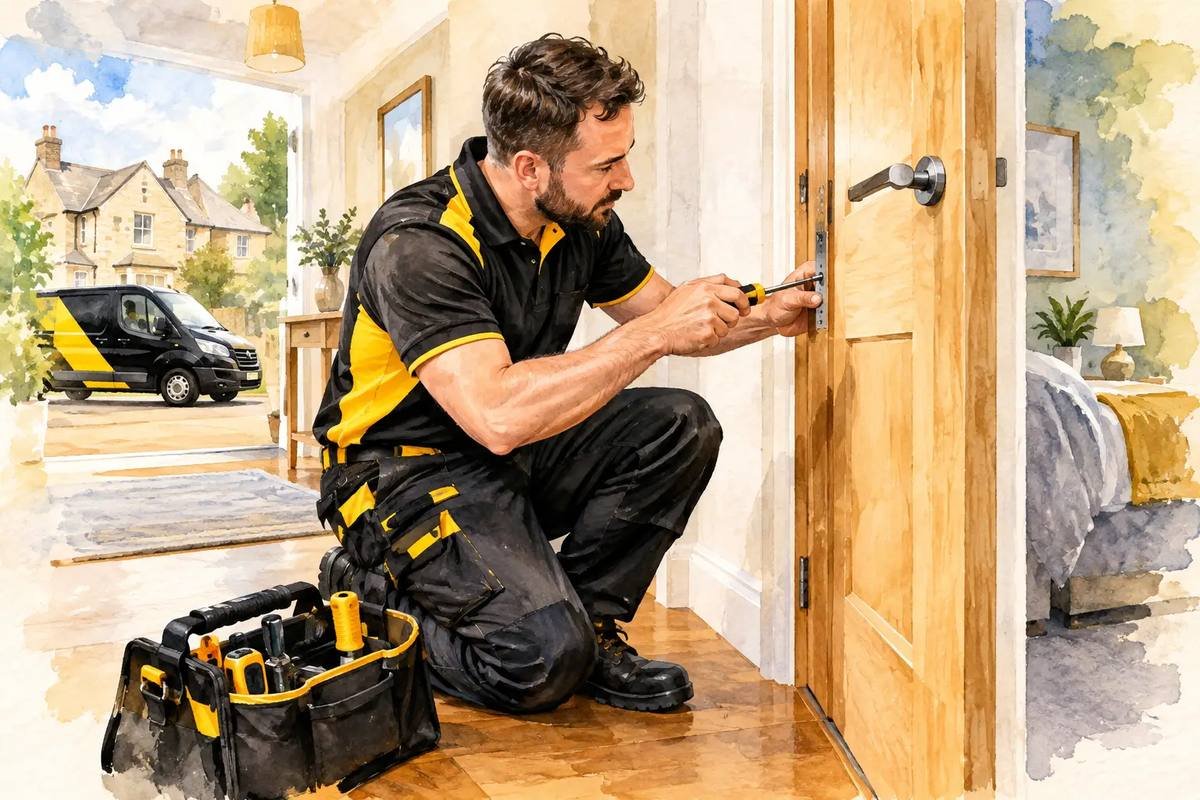
A door that catches on the frame can go from mildly irritating to properly frustrating very quickly. If you are asking, “why are my doors sticking?”, the answer is usually not that the door has suddenly become too big. More often, changes in moisture, loose hardware or movement in the frame have altered the gap by a few millimetres.
The important bit is finding where it catches and why before reaching for a plane or sandpaper. Taking timber off a door may make it close today, but it will not solve a loose hinge, damp problem or moving frame.
For the full step-by-step fix I use on timber doors — hinge screws first, then latch and keep, with planing as a last resort — see Door sticking or won't latch? How to fix it step by step. This page focuses on diagnosis: what the symptoms usually mean, and when to stop DIY.
Why are my doors sticking in the first place?
Internal and external doors are designed with a small clearance around the edges. When that clearance disappears, the door rubs, drags, scrapes or needs a firm shove to latch. In UK homes, seasonal changes are a very common reason. Timber absorbs moisture from humid air, particularly after prolonged wet weather, and can swell slightly.
That does not mean every sticky door needs trimming. A door that only sticks during damp spells may settle again when conditions become drier. A door that has begun catching suddenly, or catches harder every week, needs a closer look.
Start by opening and closing it slowly. Look for fresh scuff marks on the door edge, frame, threshold or carpet. Those marks tell you where the contact is happening. It is a much better starting point than adjusting parts at random.
The door is catching at the top corner
If the top edge catches on the hinge side or the opposite top corner, suspect the hinges first. Screws can gradually loosen in the door, frame or both. The weight of the door then allows it to drop slightly, often enough to make the top corner scrape.
Try gently lifting the handle end of the open door. Any noticeable upward movement at the hinges suggests there is play to investigate. Tighten accessible screws using a screwdriver that properly fits the screw head. Avoid overtightening, as this can damage the screw head or strip soft timber.
If screws simply spin and will not tighten, the timber around the fixing may be worn. That is typically a carpentry repair rather than a reason to keep forcing in larger screws. The hinge position, the condition of the frame and the door’s weight all need considering together.
The door is rubbing along the bottom
A door catching on carpet, a threshold or the floor can have several causes. Thick new carpet and underlay are obvious culprits, but a door can also sag because of hinge movement. A draught excluder, swollen bottom edge or movement in the floor can create the same symptom.
Check whether the rubbing is along the whole bottom edge or just one corner. Full-width contact often points to flooring or a swollen door. One corner catching is more likely to be hinge alignment or a frame that is slightly out of square.
Do not take a large amount off the bottom edge just because the carpet is catching. If the cause is a dropped hinge, adjusting the door correctly is the better fix.
The latch will not line up
Sometimes the door swings freely but will not close without lifting, pushing or pulling it into position. This usually means the latch and strike plate are no longer aligned. Hinge wear, screw movement, timber swelling and minor settlement can all move the door just enough to cause this.
Look at the latch as it meets the strike plate. Fresh scrape marks above or below the opening are useful clues. A small strike-plate adjustment may be all that is needed, but only after checking that the hinges are sound. Moving the strike plate to hide a sagging door can make the problem return.
Moisture and swollen timber
Bathrooms, kitchens, utility areas and poorly ventilated porches are common places for sticking doors. Steam, condensation and leaks can swell timber, especially around the lower edge and the lock or handle area. External doors may also take on moisture through worn paint, failed sealant or exposed end grain.
Look for peeling paint, dark staining, raised grain or a soft patch in the timber. These are signs that the issue may be more than ordinary seasonal movement. A repeatedly swollen door should prompt a check for the source of moisture. There is little value in planing the edge if a leak or failed finish is still allowing water into the timber. See also damp-proofing if the surrounding wall or frame looks affected.
With painted external doors, any newly exposed bare timber must be sealed and finished properly after adjustment. Leaving a raw edge is an easy way to invite more moisture in and repeat the problem next winter.
Check the frame as well as the door
It is easy to blame the door because it is the moving part, but frames move too. In older properties, minor settlement can alter a frame over time. In newer homes, drying-out and seasonal movement can have an effect. A frame that has shifted may pinch the door at one point while leaving a larger gap elsewhere.
Check the gap around the closed door. It should be reasonably consistent, although older homes are not always perfectly square. If the gap tapers dramatically, or you can see cracks opening around the frame, the problem may need more than a quick adjustment.
Be particularly cautious with fire doors. The gaps, hinges, closer and seals all matter. Do not plane, alter or remove seals from a fire door as a casual DIY fix. It needs an appropriate assessment and repair.
uPVC and composite doors stick for different reasons
If the door is plastic or composite, do not plane it. Sticking or awkward locking on these doors typically points to hinge adjustment, keeps or the multipoint lock — not swollen timber. I adjust uPVC and composite doors, and I replace locks and hinges where the door is sound. For timber sticking how-tos, stick with the step-by-step guide.
When to stop and get it checked
A sticking door deserves professional attention if the frame is visibly moving, the hinges are pulling out, the timber is soft or water-damaged, or the lock no longer operates properly. The same applies if an external door has become difficult to secure. Forcing the handle or lock can turn an alignment issue into damaged hardware.
Landlords should deal with reports of sticking communal, entrance or bedroom doors promptly, particularly where security, privacy or fire safety could be affected. Tenants should avoid trimming, removing hinges or altering locks without permission. A clear photo of the contact point and a note of when it started will help identify the cause.
Want it sorted for you?
For Swindon homeowners with a door issue alongside a few other practical repairs, I can assess the cause and deal with suitable adjustments during a planned visit. There is no judgement if a previous DIY attempt has not gone to plan.
I'm a one-man service, insured and DBS checked, and rated 4.9 on Google. 3-hour sessions cover Swindon (town); full days cover about 30 minutes around Swindon. I'll do my best to get through your list in the time booked.
Book a session, or message me free on WhatsApp on 07729 689420. If you'd rather talk it through first, you can book a paid 20-minute video call.
