
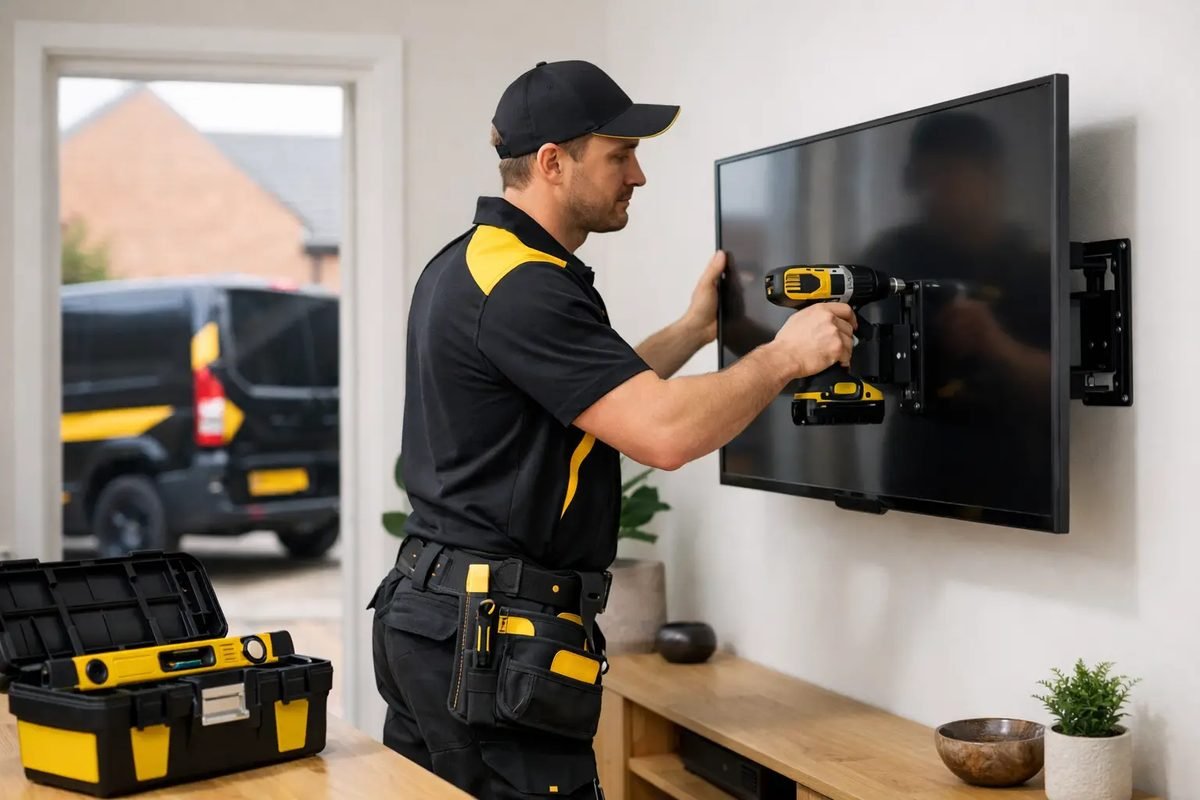
A television mounted at the wrong height is irritating every evening. A television fixed to the wrong wall can be far more serious. For TV wall mounting in Swindon, the visible result is only half the job. The bracket, wall construction, fixings, cable route and position in the room all need thought before the drill comes out.
This is one of those jobs that can look straightforward in an online video, then become less so when you are standing in front of a plasterboard wall with a heavy screen, a handful of unidentified screws and no clear plan for the cables. No judgement, no drama — a little planning makes the finished job safer, tidier and much more comfortable to use.
Start with the wall, not the television
The first question is not, “How big is the TV?” It is, “What is behind this wall?” UK homes can have solid brick, blockwork, timber studs, metal studs, dot-and-dab plasterboard or a partition wall with an unknown void. Each needs a different approach to fixing.
A solid masonry wall will usually give a strong fixing point when the correct screws and plugs are used. Stud walls need more care. The strongest position is normally into suitable timber studs, rather than relying on the plasterboard alone.
Dot-and-dab and plasterboard walls can be particularly deceptive: the board may feel solid at the surface, but there is a gap or soft backing behind it that changes the type and length of fixing required. Where the wall needs it, I reinforce with plywood so the bracket has a proper backing rather than hanging on plasterboard alone. That is a common part of safe TV mounting in modern homes, not an optional extra.
That is why a proper wall check matters. It helps establish whether the intended position is sensible before holes are drilled. If a wall or location is not suitable for the screen and bracket combination, choosing a different position is the sensible call. A neat installation is never worth taking a chance with a valuable television or the wall behind it.
Do not assume every bracket suits every wall
Brackets have their own load limits, fixing patterns and screen-size ranges. They must also match the VESA mounting holes on the back of the television. The VESA pattern is simply the spacing of those fixing holes, measured in millimetres. It is worth checking the television manual or manufacturer details rather than guessing.
The stated maximum weight on a bracket is not a target to get close to. It needs to work alongside the condition and construction of the wall. A large screen on a full-motion arm places more leverage on the fixings than a slim, fixed bracket, even if the television itself weighs the same.
Choose the bracket around how you watch TV
A fixed bracket keeps the screen close to the wall and gives the cleanest, lowest-profile finish. It is often a good choice where the seating position is directly in front of the television and access to rear connections will not be needed often.
A tilting bracket can help if the screen is mounted a little higher than ideal, such as above a low unit. It allows a small downward angle, which can improve viewing comfort and reduce reflections. It does not solve an overly high mounting position, though.
Full-motion brackets allow the screen to pull forward and turn. They are useful in open-plan rooms, kitchens or awkward seating layouts where people watch from more than one angle. The trade-off is that they project further from the wall, need more clearance and put greater demand on both the bracket and its fixing points.
Before buying a bracket, think about the equipment connected to the TV too. A soundbar, games console, set-top box or streaming device may affect the best layout. See hanging mirrors and TVs for how this sits with other fitting work. A wall-mounted television can look excellent, but it still needs practical access to the ports, remote sensors and cables.
Get the height right for your room
There is no single perfect measurement for every home. The usual aim is for the centre of the screen to sit close to seated eye level when you are on the main sofa. For many living rooms, that means resisting the temptation to mount it high up simply because there is a clear wall available.
The right height depends on the size of the screen, the height of your seating and how the room is used. A family room where children watch from the floor may need a different compromise from a lounge used mainly in the evening. If the TV is above furniture, leave enough clearance for ventilation and make sure doors, drawers and ornaments will not clash with the screen.
One practical trick is to cut a cardboard template to the screen size, or mark out its corners with low-tack tape. Sit down where you normally watch and live with the position for a few minutes. It is much easier to move tape than it is to move a mounted television and repair redundant holes.
Be cautious with chimney breasts and feature walls
Chimney breasts are popular TV locations, but they deserve an extra pause. The wall may contain an old flue, uneven masonry or areas where fixings are less straightforward. A television placed above a fireplace can also end up uncomfortably high, while heat from a working fire is not kind to electronics.
Feature panelling can introduce another consideration. Decorative timber, MDF or acoustic panels are not necessarily the structural surface that should carry the screen. The bracket normally needs to be securely fixed through the finish and into an appropriate supporting wall, studs or plywood reinforcing behind it.
Plan cables before the bracket goes up
A tidy cable plan is what makes a wall-mounted TV look intentional rather than hurried. Think about power, aerial or satellite feeds, internet connections, HDMI leads and any soundbar connection. Allow for the fact that some cables need room to bend and should not be sharply pinched behind the television.
For a fixed bracket, connections at the rear can become awkward once the TV is in place. Angled connectors or suitable cable lengths may be helpful, but these should be planned around the actual ports on your model. With an arm bracket, cables need enough slack to move safely as the screen is pulled out or turned, without dangling in a loop.
Surface trunking is often a sensible, tidy option when a concealed route is not practical. It can be fitted neatly and painted to blend with the wall. Chasing cables into a wall is a bigger decision, and the route must be considered carefully. Existing services may be hidden behind the plaster, so this is not a place for assumptions. I do not do electrics — any work involving fixed wiring should be assessed and carried out by a qualified electrician.
What to have ready before the appointment
A little preparation helps the work go smoothly. Have the television, compatible bracket and any cables or accessories on site, preferably still with the instructions available. If you have the make and model of the TV and bracket, share those details in advance along with a photo of the proposed wall and the room.
It also helps to decide where connected devices will sit. There is no point creating a smart, cable-free television position if the console, router or media box has nowhere sensible to go afterwards. If a soundbar is part of the setup, decide whether it will sit on the unit, mount below the TV or need its own fixing arrangement.
Move small ornaments and furniture away from the working area where possible. Dust sheets and careful working protect the room, but clear access makes it easier to measure accurately and keep the job tidy. For rented property, landlords and tenants should agree the position before work starts, particularly where there are newly decorated walls or tenancy requirements to consider.
A sensible way to book TV wall mounting in Swindon
TV wall mounting is often ideal to combine with other small jobs around the home: putting up shelves, hanging a mirror, fitting a curtain pole, adjusting a sticking internal door or dealing with a few items that have sat on the list for months. Grouping suitable tasks into one planned visit can typically be more efficient than arranging separate appointments.
Handyman Plus Van works through clear 3-hour and full-day labour slots, which suits well-defined domestic jobs and maintenance lists. Message me free on WhatsApp, or book a paid 20-minute video call if you'd rather talk it through. It gives you a chance to show the proposed position, ask practical questions and get a typical time estimate so the booking is realistic.
Not every television installation is the same, and it is better to be clear about that from the start. Unusual wall construction, very large screens (and anything over a 15 kg lift for one person), restricted access or a complicated cable plan may need a different approach or more planning. Straight answers before the work begins are better than rushed decisions on the day.
A well-mounted TV should disappear into the room: level, secure, comfortable to watch and without a tangle of leads stealing the attention. Take a few minutes to check the wall and plan the layout first, then you can enjoy the screen rather than second-guessing what is holding it there.
Want it mounted?
I'm a one-man service, insured and DBS checked, and rated 4.9 on Google. 3-hour sessions cover Swindon (town); full days cover about 30 minutes around Swindon. I'll do my best to get through your list in the time booked.
Book a session, or message me free on WhatsApp on 07729 689420. If you'd rather talk it through first, you can book a paid 20-minute video call.
