
Picture the smoke alarm going off in the middle of the night. You get to the front door, and the key isn't where you thought it was. That's the moment a thumb-turn lock earns its keep. Here's what one is, when it's a good fit, and when it isn't.
What a thumb-turn cylinder is
A thumb-turn cylinder has a normal keyhole on the outside and a small knob on the inside. From indoors you lock and unlock the door by turning the knob, so nobody has to find a key in the dark. On most uPVC and composite doors you still lift the handle first, then turn the knob.
Thumb-turn versions come with the same anti-snap ratings as key-only cylinders. If you're not sure what your current lock is, my guide to the anti-snap euro cylinder check shows which markings to look for and how to measure.
Why the key in the door isn't the answer
Leaving the key in the lock feels like the safe option for a fire. The Fire Kills escape advice says otherwise: keep keys safe but accessible near the exit they fit, and don't leave them in locks where they could fall out or be hard to find in the dark. Make sure everyone knows where they are.
Security advice agrees from the other side. Thames Valley Police's Secure Your Home guide says to take keys out of locks and keep them out of sight, with everyone in the home knowing where they're kept so they can escape in a fire.
When a thumb-turn isn't a good fit
A thumb-turn only helps if nobody outside can reach it. Think about:
- The letterbox. Police advice suggests a letterbox restrictor or guard, because tools can be poked through to open latches from the inside. The Ask the Police home security FAQ lists a letterbox restrictor too.
- Glass next to the lock. If a panel could be broken to reach the knob, a key-only cylinder may be the better choice.
- Cat flaps set low in the door, close to the lock.
If any of those apply, keep a key-only cylinder and give the key a proper home near the door, out of sight and away from the letterbox.
A quick check you can do tonight
- Turn the lights off and try unlocking the front door, then the back door.
- Pick one spot for each door key and stick to it. London Fire Brigade's escape plan page suggests hooks behind curtains or a box on a window sill.
- Show everyone in the house, including visitors who stay over.
- Plan a second way out in case the first is blocked.
- Test your smoke alarms while you're at it.
How I can help
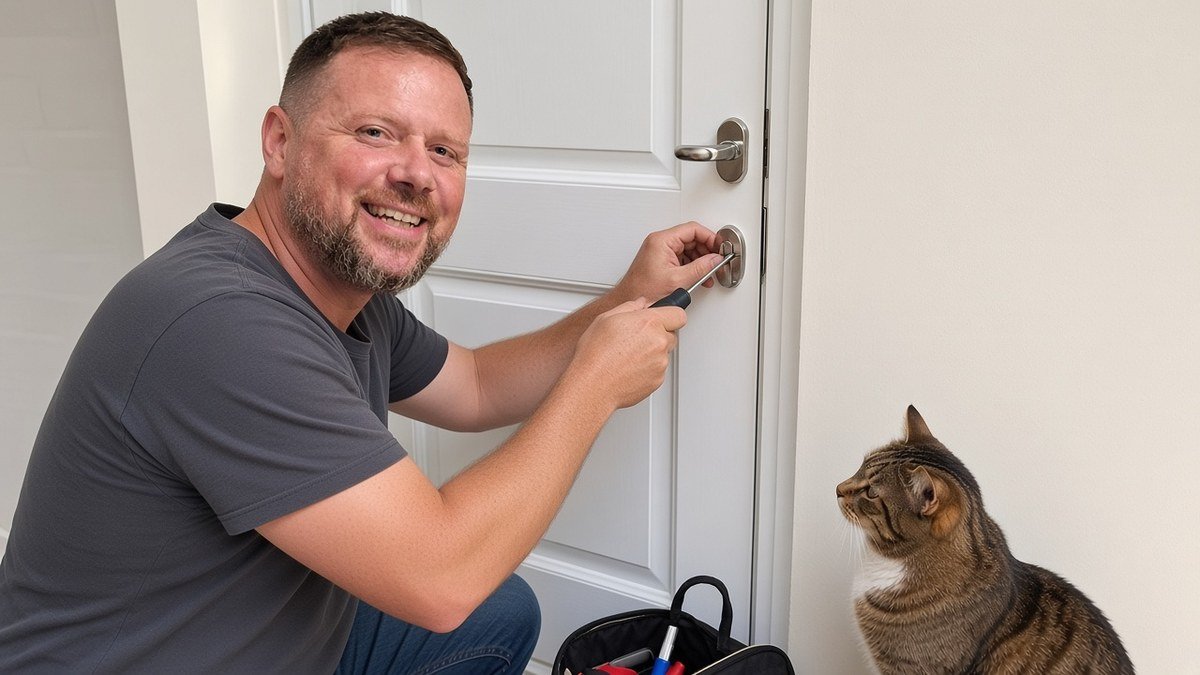
I change uPVC and composite door locks, and swapping to a thumb-turn cylinder is typically one item on a list rather than a whole session. See my changing locks service. Sessions are 3-hour slots in Swindon, or full days covering about 30 minutes around Swindon. I work through your list in your order and do my best to get it done in the time booked. Small bits from my van stock aren't charged, and a new cylinder goes on the invoice at cost. No electrics, no gas and no full door replacements. If you rent, check with your landlord before any lock is changed.
More on this: my blog post on thumb-turn locks and where to keep your front door key, and the dark evenings home safety checklist.
Book a session or message me on WhatsApp on 07729 689420.
