A multipoint lock that worked fine in October can feel jammed on the first proper cold morning. The handle won't lift. The key fights you. It's tempting to blame the cylinder and replace it.
Often that isn't the fault.
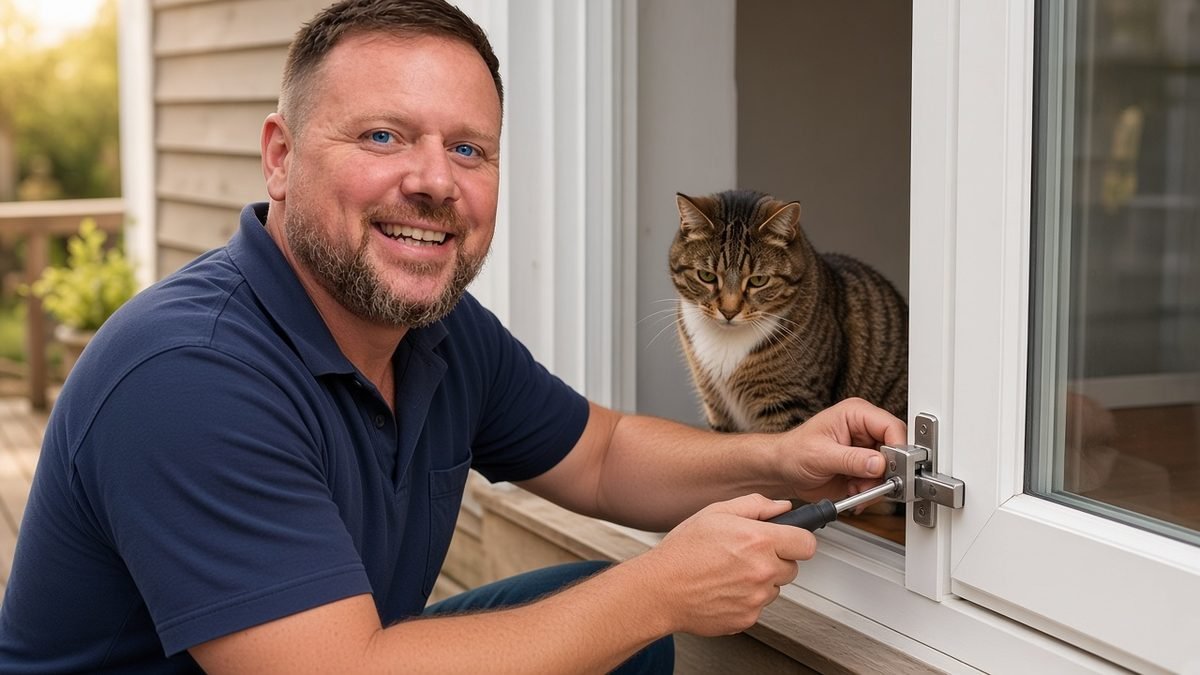
I'm Ian from Handyman Plus Van. I adjust uPVC and composite doors myself, and I replace locks and hinges within a booked session. Full replacement doors and windows stay with specialists (Building Regs and weight). Everyday multipoint setup is the sort of job that fits a session list.
Diagnose with the door open first
Open the door. Lift the handle. Turn the key gently.
- Smooth open, stiff closed: alignment, hinges, keeps or seal compression are the usual suspects. Cold weather stiffens seals and thickens old grease, so a door that was slightly out of line suddenly binds.
- Stiff even when open: look at the cylinder, the multipoint gearbox, or a dry mechanism — still without forcing anything.
Never shoulder the door and yank the handle. That chews gearboxes and snaps keys.
Alignment and hinges next
Check the gaps around the door. A tight gap at the top latch side with a wider gap at the bottom often means the door has dropped.
Many uPVC and composite hinges adjust with an Allen key (height, lateral, sometimes compression). Make small turns and test after each change. If a hinge screw spins uselessly, the fixing may need attention before you chase the lock.
Timber doors that rub are a different problem — hinges and keeps first, planing last, and never plane plastic or composite.
Keeps and strike plates
The metal keeps on the frame guide the latch, hooks and rollers home. Shiny rub marks show where something scrapes.
- Loosen the keep screws slightly (don't remove them).
- Nudge the keep a small amount — typically a millimetre or two.
- Tighten and test one keep at a time.
Adjusting every keep at once makes it harder to see what helped.
Lubricate correctly
A penetrating spray such as WD-40 can free a lock today and leave dust stuck in the mechanism later. For cylinders, a dry PTFE lock spray or a dedicated lock lubricant is the usual choice. Work the key through the pins and wipe excess.
On the visible multipoint strip along the door edge, a light PTFE or silicone-based lock lubricant on the moving points typically helps. Graphite powder is another option some people use on cylinders — match the product to the part. Avoid household oils, grease and cooking sprays.
Cylinder, mechanism or hinges?
- Smooth open, stiff closed: hinges, alignment, keeps or compression.
- Key rough every day, open or closed: cylinder.
- Handle lifts but hooks don't move, grinding, or the handle drops: multipoint gearbox / mechanism.
I replace worn cylinders, multipoint locks and hinges when that's what the door needs. Tiny odds and ends from the van typically aren't charged; bigger parts go on the invoice at cost, within a sensible limit on what I buy in on the day. Collecting parts happens inside the booked session time.
Want it sorted for you?
Lock alignment, keep adjustment and lock or hinge replacement are the sort of jobs that sit neatly on a booked list. Handyman Plus Van is a one-man service, insured and DBS checked, rated 4.9 on Google. 3-hour sessions cover Swindon; full-day bookings typically reach about a 30-minute drive around Swindon. I'll do my best to get through your list in the time booked. No electrics, no gas.
Book a session, or message me free on WhatsApp on 07729 689420.
For a lighter take on the same problem, read the blog post: Stiff multipoint lock on a cold morning?