
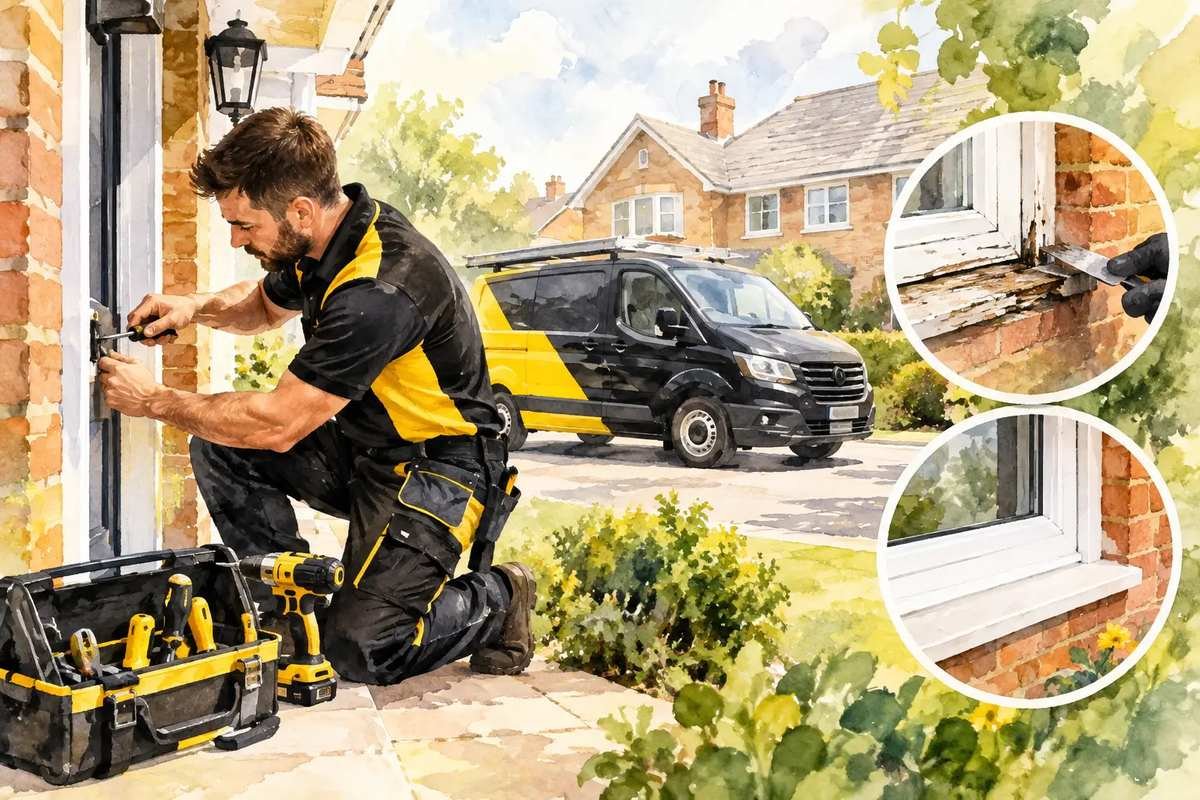
A flat can look perfectly presentable at the viewing, then reveal a page of small problems once it is empty. A loose cupboard door, tired sealant, a sticking window handle and a damaged latch may not be major works on their own. Together, they can hold up cleaning, photography or a new tenancy. This rental property repair case study shows why a clear list and one well-planned visit often make more sense than chasing several people for minor jobs.
The details below are based on a typical between-tenancies maintenance visit, with identifying details changed. It is not a promise that every repair will fit into one appointment. Condition, access, materials and any hidden defects always matter. But it is a useful example of how a landlord can turn a frustrating snagging list into a manageable plan.
The starting point: a short void period and a long snagging list
The landlord had a two-bedroom Swindon property due to be cleaned and marketed within the week. The outgoing tenant had left the place broadly tidy, but normal wear and tear had built up over several years. Nothing called for a full refurbishment. The issue was that the jobs were spread around the property and easy to put off.
The initial list included a kitchen cupboard door hanging low, a loose bedroom curtain rail, a bathroom basin tap that dripped after use, discoloured sealant around part of the bath, a stiff uPVC window handle, a latch that did not catch cleanly on an internal door, and scuffs on a hallway wall. There was also a request to fit a new key safe supplied by the landlord before the next tenant moved in.
This is a familiar landlord problem. Calling a different person for each task can mean multiple appointments, access arrangements and invoices. Doing nothing can mean the small defects become the first impression for a prospective tenant. The sensible middle ground was to group suitable work into a planned handyman visit.
Planning the repair visit properly
Before booking, the landlord sent photographs and a written list. That simple step made a difference. Photos of the cupboard hinge, window handle and bathroom sealant gave a clearer view of likely materials and tools. A short video would also have helped with the stiff handle and the door latch, as moving parts often tell more of the story than a still image.
The key was to separate jobs into three categories: work that was clearly suitable for a maintenance visit, work that might need parts, and work that could reveal a larger issue once inspected. The cupboard hinge, curtain rail, latch adjustment, key safe and wall touch-up were straightforward in principle. The tap, sealant and window mechanism needed an on-site look before anyone could say exactly what was required.
A six-hour slot was chosen rather than trying to squeeze a multi-room list into a shorter visit. That was not because every job would necessarily take six hours. It allowed sensible working time, including protecting surfaces, making adjustments carefully, allowing sealant to be applied neatly and testing repairs before leaving. It also reduced the risk of rushing through the final jobs because an earlier task took longer than expected.
For landlords, this is where realistic expectations save trouble. A timed booking works well when the task list is clear and the work is within scope. If inspection suggests a bigger repair or a project involving several trades, it should be planned separately, typically over several sessions or with the right specialist, rather than forced into a single handyman appointment.
What was found on arrival
The flat was vacant and the landlord had arranged access, so the visit could start without waiting for keys or trying to work around a tenant's routine. The first job was not picking up a tool. It was walking through the list, checking the reported faults and agreeing the order of work.
The kitchen door was not damaged beyond repair. Two hinge screws had worked loose and the door needed realigning. The curtain rail had pulled away because the original fixings were no longer gripping properly. It could be refixed securely, but the wall needed suitable plugs rather than simply tightening the old screws.
The basin tap was dripping because the cartridge was worn. The existing cartridge was not a common type that could sensibly be guessed at from photographs. Rather than fit an unsuitable part or make a temporary bodge, the tap was made safe and the correct replacement part was identified for a return visit.
The bathroom sealant looked untidy but, more importantly, had separated in a short section by the bath edge. The surrounding area was checked for signs of an ongoing leak or soft material. There were none, so removing the failed sealant, preparing the surface and applying fresh sanitary sealant was an appropriate repair.
The window handle felt stiff because the mechanism had become dry and slightly misaligned. After adjustment and suitable lubrication, it opened and closed correctly. This was a good result, but not one to assume in advance. If a mechanism is worn or broken, it may need replacement parts instead.
The work completed during the appointment
The jobs were carried out in an order that kept the property tidy and avoided disturbing fresh work later. The cupboard door was adjusted first, then the loose curtain rail was removed and refixed using appropriate fixings. The internal door latch was aligned so that it closed without needing a shove or a lift of the handle.
The failed bath sealant was cut out cleanly, the edge was cleaned and dried, and new sealant was applied. Because fresh sealant needs time to cure, the landlord was told not to use the bath or allow cleaners to wet that area immediately. A repair is only useful if the follow-up instructions are clear.
The key safe was installed in the agreed position, with care taken over location and fixing. The hallway scuffs were prepared and touched up using paint the landlord had kept from a previous decoration job. Using the right paint mattered. A close-looking white from another tin can dry to a noticeably different shade.
By the end of the slot, six of the seven original items had been dealt with, tested where relevant and left tidy. The tap cartridge was the exception. That was not a failure of the appointment. It was the right point to stop, source the proper component and arrange a targeted return rather than risk fitting the wrong part.
What the landlord gained beyond the individual repairs
The obvious benefit was that the property looked more cared for before marketing. Cupboard doors sat straight, the curtain rail was secure, the bathroom had a clean finish and the window and door worked as they should. Those details help a property feel looked after, even when no major improvement has taken place.
There was also an operational benefit. One planned visit dealt with work in the kitchen, bathroom, hallway and bedroom without the landlord needing to coordinate several separate appointments. For a landlord who lives outside the area or has a busy day job, that reduction in back-and-forth is often as valuable as the repair itself.
Just as useful was having a clear record of what had been found. The tap needed a specific part, so the next step was defined. There was no vague note saying it had been "looked at". Good maintenance is not about pretending every issue has a quick fix. It is about understanding what can be repaired now, what needs a part, and what should be planned as a separate job.
Lessons from this rental property repair case study
The biggest lesson is to report small faults early and describe them properly. A list saying "bathroom issue" or "window broken" creates uncertainty. A brief description, a photo and, where useful, a video make it far easier to plan the right amount of time and bring suitable tools.
It also helps to group tasks by room but prioritise them by consequence. A stiff window handle, damaged lock or failed sealant may matter more than cosmetic scuffs. Landlords should consider whether a problem affects security, water ingress, day-to-day use or the impression a new tenant will get on arrival.
Finally, leave enough room in the schedule. Between a tenancy ending and another beginning, cleaners, decorators, inventory clerks and viewings can all compete for access. Booking maintenance early gives you options if a part is needed or an unexpected defect comes to light.
For small and medium domestic maintenance lists in Swindon, Handyman Plus Van can be a practical fit when the work is planned honestly and access is arranged. You deal directly with Ian, the man, the van and the toolbox, rather than an anonymous rota of contractors.
A rental property does not need perfection before every tenancy. It does need the basics to work properly, look cared for and be dealt with before minor defects turn into avoidable complaints. Start with a clear list, allow sensible time, and treat the few jobs that need further work as a plan, not a panic.
Want to book?
I'm a one-man handyman service in Swindon — insured, DBS checked, and rated 4.9 on Google. 3-hour sessions cover Swindon (town); full days cover about 30 minutes around Swindon.
Book a session, or message me free on WhatsApp on 07729 689420. If you'd rather talk it through first, you can book a paid 20-minute video call.
