
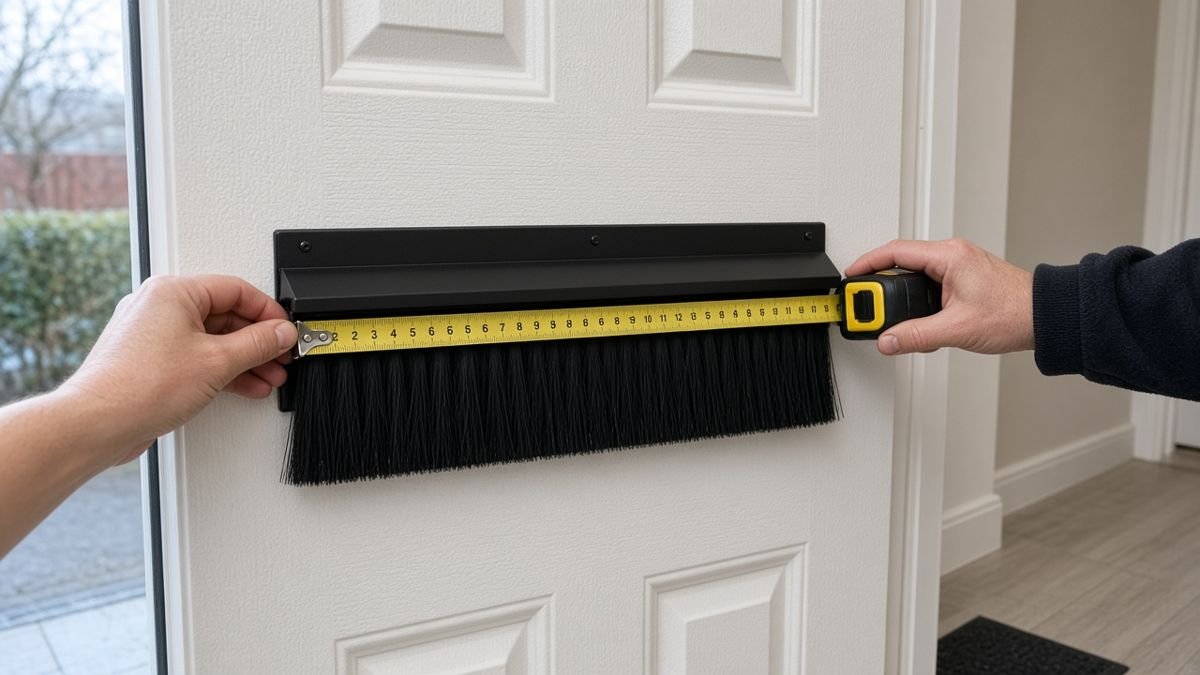
When the heating goes on in Swindon, the front door is often where a lot of the cold gets in. The usual suspects are small and easy to miss: the letterbox, the keyhole and the gap under the door. Each one is a simple fix, and together they can make a hallway feel noticeably less chilly.
Here's how I check and sort them.
Step 1: Find the draught
Pick a windy day. With the door shut, hold the back of your hand near the letterbox, the keyhole, the bottom of the door and down both edges of the frame. Cold air on your skin tells you where to start.
Then turn the hallway light off and look for daylight round the letterbox flap and under the door. If you can see light, air is getting through.
Step 2: Fix the letterbox
Most letterbox draughts come from a flap with nothing behind it, or an inner brush that has gone flat or come away.
- Check the inside face of the door. A letterbox brush or hinged inner flap should sit over the opening on the inside.
- Measure the opening. Note the width and height of the slot, and how much flat door there is around it to screw into. Letterboxes vary, so buy to fit.
- Choose a brush or a flap. Brush excluders let post through easily. Hinged inner flaps give a firmer seal on very exposed doors.
- Fit it with suitable screws. Use screws short enough that they won't come through the front of the door.
- Test it. Post an envelope through. It should pass easily and the brush or flap should close behind it.
Step 3: Cover the keyhole
A small swing cover on the inside of the keyhole stops a surprisingly sharp draught. It typically takes a few minutes to fit.
Step 4: Seal the bottom of the door
If you can see daylight under an external door, fit a brush strip or a hinged draught excluder to the bottom of the door. Check the door still opens over any mat or threshold before you fix it in place. A good brush strip also helps close one of the gaps mice use to get in during winter.
Step 5: Check the frame
If the door rattles when it's shut, or you can feel air down the edges, the seals round the frame or the door's adjustment may need attention. Worn seals can often be replaced, and a door that has dropped can sometimes be adjusted so it closes tightly again.
What not to block
Draught-proofing is for accidental gaps only. Leave air bricks, trickle vents, extractor fans and any fixed vents for gas appliances alone. They keep the house dry and, where gas appliances are concerned, safe. If you're not sure what a vent is for, leave it and ask a Gas Safe registered engineer. The Energy Saving Trust's draught-proofing advice is a good place to read more.
Want it done for you?
Fitting a letterbox brush, a keyhole cover and a door-bottom brush is the sort of small job that fits neatly into a booked session alongside the rest of your list. I'm a one-man service covering Swindon, insured and DBS checked, and rated 4.9 on Google. Sessions are booked in 3-hour or full-day slots, and I'll do my best to get your list done in the time booked.
See my carpentry and small fittings, book a session, or message me free on WhatsApp on 07729 689420. If you'd rather talk it through first, you can book a paid 20-minute video call.
For a lighter take on the same job, read my blog post: Letterbox letting the cold in?
