
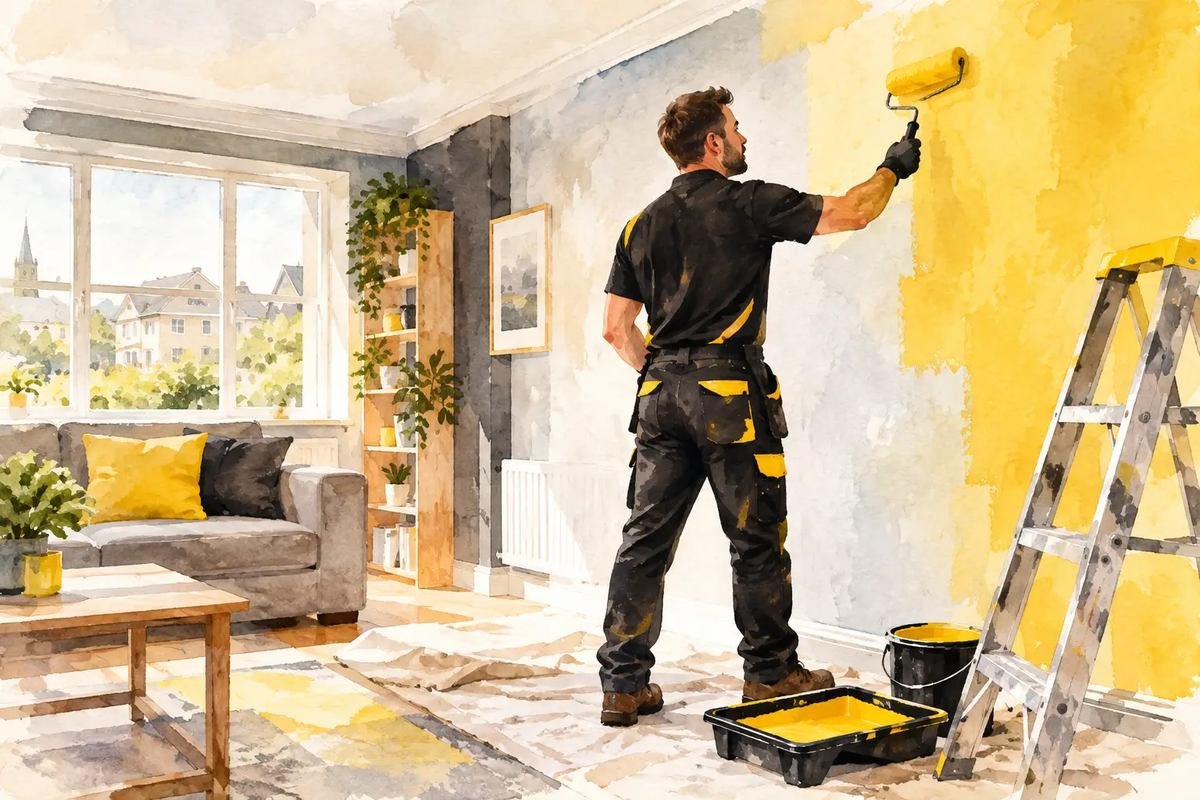
A fresh coat of paint can make a tired hallway feel looked after, brighten a spare room before a new tenant moves in, or finally deal with the scuffs around the kitchen table. But interior painting is rarely just a case of opening a tin and getting started. The finish is only as good as the preparation underneath it, and rushing the awkward bits usually shows once the room is back in use.
For homeowners and landlords, the sensible aim is a clean, durable finish that suits how the room is actually used. That means choosing the right paint, allowing proper drying time and dealing with small defects before they become very obvious under a new colour.
Start by deciding what the room needs
Before choosing a shade, look carefully at the surfaces. Walls may have picture-hook holes, old filler, hairline cracks, greasy marks, loose paint or staining around windows and radiators. Skirting boards, doors and frames often need a different approach from walls, particularly where there are knocks from shoes, pets, prams or everyday family life.
This first check also helps separate a painting job from a repair job. A small settlement crack can usually be prepared and filled. Peeling paint, recurring stains or a wall that feels damp needs closer attention before decorating. Painting over an active moisture issue might improve the appearance for a short while, but it will not solve the cause and the new finish may fail.
For a rental property, this is a useful moment to be realistic about the standard required. A full refresh between tenancies may be worthwhile in high-traffic rooms, while a careful local repair and touch-up can make better sense where the existing paint is still sound. The right choice depends on condition, time available and whether the same paint can be matched properly.
Preparation makes interior painting last
Most of the work in a tidy room comes before the first full coat goes on. Furniture should be moved or covered, floors protected and fittings considered properly. It is much easier to paint neatly around a radiator or light switch after taking time to mask and protect the area than it is to scrape paint off later.
Walls need to be clean, dry and sound. In kitchens, finger marks and cooking residue can stop paint adhering as it should. In bathrooms, condensation and old residue need dealing with before a suitable moisture-resistant finish is applied. A light sand between coats can make a noticeable difference on repaired areas, doors and woodwork, but dust must then be removed rather than painted straight over.
Good preparation usually includes filling small holes and dents, sanding repairs flush, scraping loose edges and applying the right primer where needed. Bare filler can absorb paint differently from the surrounding wall, creating dull patches known as flashing. A mist coat or suitable primer helps even this out, depending on the surface and paint system.
There is a trade-off here. It can be tempting to keep filling and sanding until every old imperfection disappears, but older homes often have walls with a little character. The practical standard is a smooth, sound surface that looks good in normal daylight, not a promise that every historic ripple in the plaster can be erased.
Do not skip the test patch
Paint colours change dramatically between a shop display, a mobile phone screen and your own room. Natural light, warm bulbs, north-facing windows and nearby flooring all affect what you see. Test a small area on more than one wall and look at it morning, afternoon and evening.
A sample also shows how well the new colour covers the old one. Deep colours, strong reds, yellows and major colour changes may need an extra coat or a suitable base coat. Planning for this is better than finding out halfway through that one tin will not be enough.
Choose paint by room, not just by colour
The sheen level matters as much as the colour. Matt emulsion is popular for walls because it gives a soft finish and can hide minor surface variation. However, very flat matt finishes may mark more easily in a busy hallway or on a wall regularly touched by small hands.
For hard-working spaces, washable matt or a durable eggshell can be a practical compromise. Kitchens and bathrooms benefit from paints designed to cope with moisture and cleaning, provided the room is ventilated and the surface is properly prepared. Paint is not a cure for persistent condensation, but the right product makes routine cleaning easier.
Woodwork needs its own consideration. Skirting boards and door frames take more knocks than walls, so a tougher finish is often sensible. A water-based trim paint may dry quickly and have less odour, which is useful in an occupied home. Some people still prefer the flow and finish associated with traditional oil-based products, but these can take longer to dry and may yellow in low-light areas over time.
When matching existing paint, keep any old tins or make a note of the brand, colour and finish. The same named colour in a different finish can look noticeably different. Even an exact match may stand out if the surrounding wall has faded or been cleaned over several years.
Plan the order of work before opening the tin
A sensible sequence prevents avoidable mess. Ceiling first, then walls, then woodwork is a common approach because any splashes can be dealt with as you work down. Cutting in around ceilings, corners and fittings before rolling the larger areas gives a more controlled result.
Keep a wet edge while rolling. In plain English, do not paint one small section, leave it to dry, then overlap it much later. Work in manageable strips and blend each section into the next while the paint is still wet. This reduces visible lap marks, especially in rooms with strong side light from a window.
Two coats are often needed for a consistent finish, but the label drying time is not a rough suggestion. Cool rooms, poor ventilation and high humidity can slow things down. Recoating too soon can drag the first layer, create patchiness or leave a softer finish that marks easily.
It is also worth allowing for the fact that a room may be out of use for part of the day. A child’s bedroom, home office or busy kitchen may need work planned in stages. Good decorating is disruptive for a short time; poor planning makes it disruptive for much longer.
Neat edges are where the job shows
People tend to notice the line where wall meets ceiling, the paint around sockets, and the finish along skirting boards before they notice the centre of a wall. Taking time on these details gives a room a sharper, more professional appearance.
Use a decent angled brush for cutting in and avoid overloading it. Too much paint on the brush is what causes drips, thick ridges and splatter. Rollers should be chosen to suit the wall texture: a shorter pile for smooth plaster and a slightly longer pile for more textured surfaces. Cheap tools can shed fibres or leave inconsistent coverage, which is frustrating when the paint itself is perfectly good.
Where surfaces meet, masking tape can help, but it is not magic. Press it down firmly, remove it carefully at the right stage and do not rely on it to hide rushed preparation. On delicate or freshly painted surfaces, tape can lift paint if removed carelessly.
When a booked handyman visit makes sense
Interior painting can work well as part of a wider list of smaller improvements. Perhaps the walls need refreshing after curtain poles have been moved, a few holes need filling, a loose piece of trim needs attention and a mirror needs rehanging once the paint has dried. Grouping compatible tasks can make a practical difference to a home without coordinating several people.
For larger rooms, extensive repairs or a full refurbishment, the work typically needs several sessions and a proper plan rather than trying to squeeze everything into a limited labour slot. No judgement, no drama - it is simply better to set realistic expectations on preparation, coats, drying times and access before work starts.
Handyman Plus Van can help Swindon homeowners and landlords tackle smaller painting and maintenance lists with one named, insured professional and a tidy approach to the property. Message me free on WhatsApp, or book a paid 20-minute video call if you'd rather talk it through.
The best time to plan painting is before the room becomes a problem. Deal with the scuffs, small repairs and tired patches while they are still manageable, choose a finish that suits daily life, and give each coat the time it needs to do its job.
Want to book?
I'm a one-man handyman service in Swindon — insured, DBS checked, and rated 4.9 on Google. 3-hour sessions cover Swindon (town); full days cover about 30 minutes around Swindon.
Book a session, or message me free on WhatsApp on 07729 689420. If you'd rather talk it through first, you can book a paid 20-minute video call.
