
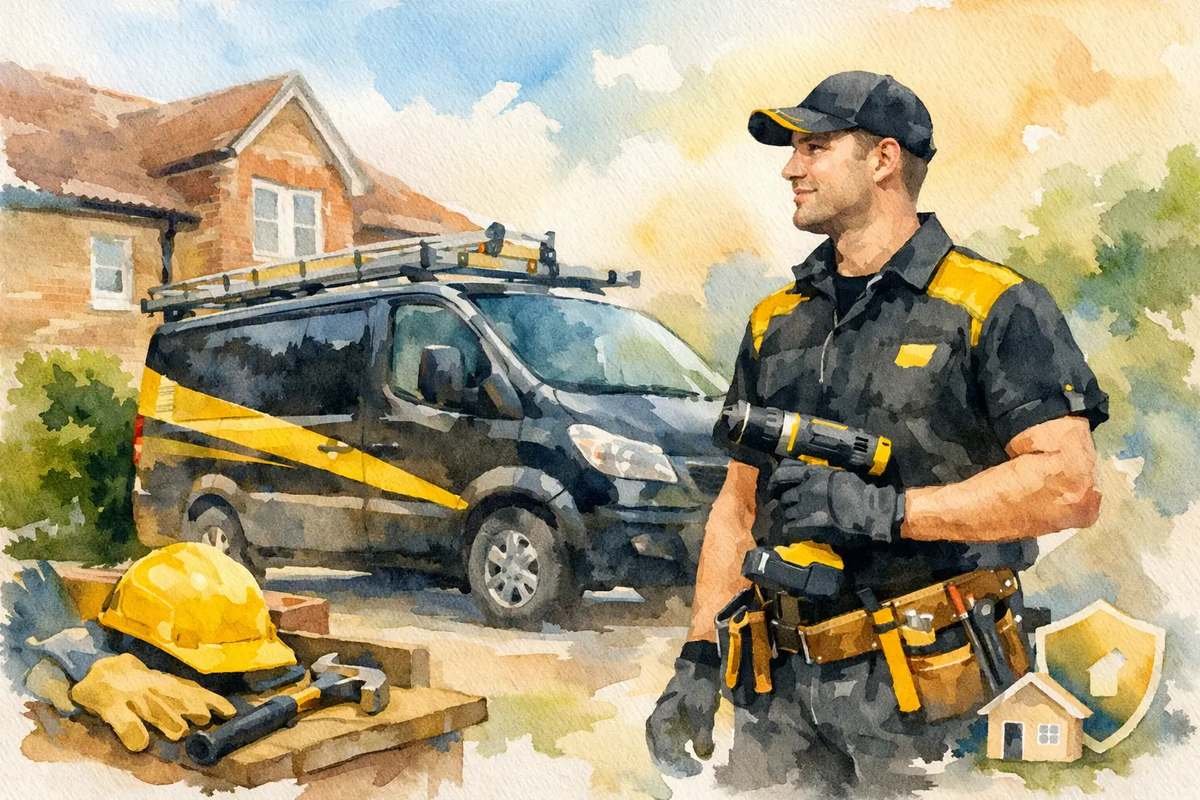
A loose door handle, a dripping trap beneath the sink and a TV still waiting to be put on the wall can all seem like small jobs. Put them together, add a busy week, and they become a source of stress. Booking an insured handyman is about more than getting through that list. It is about letting someone into your home with clear accountability, sensible working practices and a professional approach if something does not go to plan.
For homeowners, landlords and property managers, insurance is one of the simple checks that separates a properly run local service from a vague promise on a marketplace advert. It should not be the only thing you ask about, but it should be near the top of the list.
What an insured handyman actually means
In practical terms, an insured handyman holds relevant business insurance for the work they undertake. The policy most customers will want to ask about is public liability insurance. This is designed to provide cover if accidental damage to property occurs while the work is being carried out.
Nobody books a handyman expecting that sort of thing to happen. The point of insurance is that there is a proper route to deal with an accidental incident rather than an awkward argument over who pays.
It is not a badge that makes every task risk-free, and it does not mean every type of loss is automatically covered. Policies have limits, terms and exclusions. But it does show that the person coming into your home has considered their responsibilities and taken a basic professional precaution. You can see Handyman Plus Van certificates on the certificates page.
Why insurance matters in your home or rental property
Your home is not a worksite set up for trades. It is full of belongings, finished surfaces, family routines and, often, surprises behind a panel or under a floorboard. A careful professional will protect the area, use the right equipment and stop if a job becomes unsafe or outside their scope. Insurance supports that careful mindset.
For a landlord, the issue is also one of duty and record-keeping. A tenant needs to know who is attending, what work is planned and that the person has been properly instructed. Using an insured, DBS-checked professional can make access arrangements feel more straightforward, particularly where a small collection of repairs needs handling in one visit.
For homeowners, it is often about confidence. You may be perfectly capable of putting up a shelf, changing a lock or resealing a shower, but lack the time, tools or desire to spend your evening troubleshooting it. A professional should leave the place tidy, explain what has been done and treat your property with respect. Insurance is part of the reassurance, alongside good communication and careful work.
Insurance is not the only check to make
It is tempting to see the word “insured” and assume the rest will take care of itself. In reality, the best booking decisions come from asking a few sensible questions before anyone arrives.
First, make sure the handyman is clear about the job. Photos, measurements and a short description can prevent wasted time and help identify any parts that may be needed. A brief paid 20-minute video call can be useful for smaller task lists where you want advice and a typical time estimate before you book.
Second, ask who will actually attend. There is real value in dealing directly with one named person rather than an unknown subcontractor. You know who has discussed the work, who has access to the property and who remains accountable for the finish.
Third, look for sensible boundaries. A dependable handyman does not say yes to everything. They will be open about work that needs a specialist, jobs that require a different access arrangement, or projects too large to plan honestly from a few photographs. That is not unhelpful. It is how risks are kept under control.
Finally, ask for confirmation of insurance where appropriate. A reputable operator should not take offence at the question. You do not need to become an expert in policy wording, but you are entitled to understand that cover is in place for the services being discussed.
The difference between cheap and good value
The cheapest-looking arrangement is not always the best value in the end. An unclear plan can lead to missed appointments, half-finished jobs, unexpected extras or work that has to be put right later. Those problems are frustrating in your own home and even more troublesome in a rental property with tenants waiting for repairs.
Good value comes from knowing how the visit will work before you book. Time-based appointments can be particularly useful when you have several practical jobs to tackle: adjust a cupboard door, fit a curtain pole, repair a window mechanism, refresh sealant and hang a mirror, for example. One organised visit can typically be more efficient than trying to coordinate several separate people.
That said, not every list belongs in a single slot. A job can take longer than expected once materials are removed or hidden damage becomes visible. Larger refurbishment work typically needs several booked sessions and a clear plan. A straight answer at the start is far more useful than a rushed promise that everything will be completed in an afternoon.
What careful working looks like
Insurance sits behind the work. Professional habits are what you see on the day. A good handyman arrives prepared, confirms the priorities, protects adjacent surfaces where needed and keeps the work area as orderly as possible. They will tell you if they find an issue that changes the plan rather than quietly pressing on.
Safe access matters too. Some jobs need equipment, a second person or a different solution. It is reasonable for a handyman to decline unsafe work, especially where access is restricted or the task goes beyond what can be completed safely. The right answer is not always the quickest one.
Communication is equally important. If parts are required, if a repair needs another visit, or if one task will take longer than expected, you should know early enough to make a decision. No judgement, no drama — just a clear explanation of the options.
A practical checklist before you book
Before confirming a visit, have your task list ready and share photos where they will help. Include the room, approximate measurements, the item to be fitted or repaired, and anything that may affect access. If you are a landlord, make sure the tenant knows the date, time window and name of the person attending.
Then check that the handyman is insured for the type of domestic work requested, that the booking duration is realistic, and that you understand whether materials are included or supplied separately. It also helps to agree which jobs are the priority if time is limited.
At Handyman Plus Van, the approach is simple: you deal directly with Ian — the man, the van and the toolbox — for clearly defined domestic tasks. 3-hour sessions cover Swindon (town); full days cover about 30 minutes around Swindon. Larger lists typically need several sessions rather than one overloaded day.
Peace of mind starts before the work begins
An insured handyman will not make household maintenance disappear, and insurance is not a substitute for skill, care or honest advice. What it does provide is a solid foundation for a professional relationship: someone identifiable, prepared to work safely, clear about their limits and equipped to take responsibility for accidental problems.
When your home repair list starts growing, choose the person who asks the right questions before picking up a tool. That small bit of preparation usually makes the visit calmer, the work clearer and your home easier to get back to enjoying.
Want to book?
I'm a one-man service, insured and DBS checked, and rated 4.9 on Google. 3-hour sessions cover Swindon (town); full days cover about 30 minutes around Swindon. I'll do my best to get through your list in the time booked.
Book a session, or message me free on WhatsApp on 07729 689420. If you'd rather talk it through first, you can book a paid 20-minute video call.
