
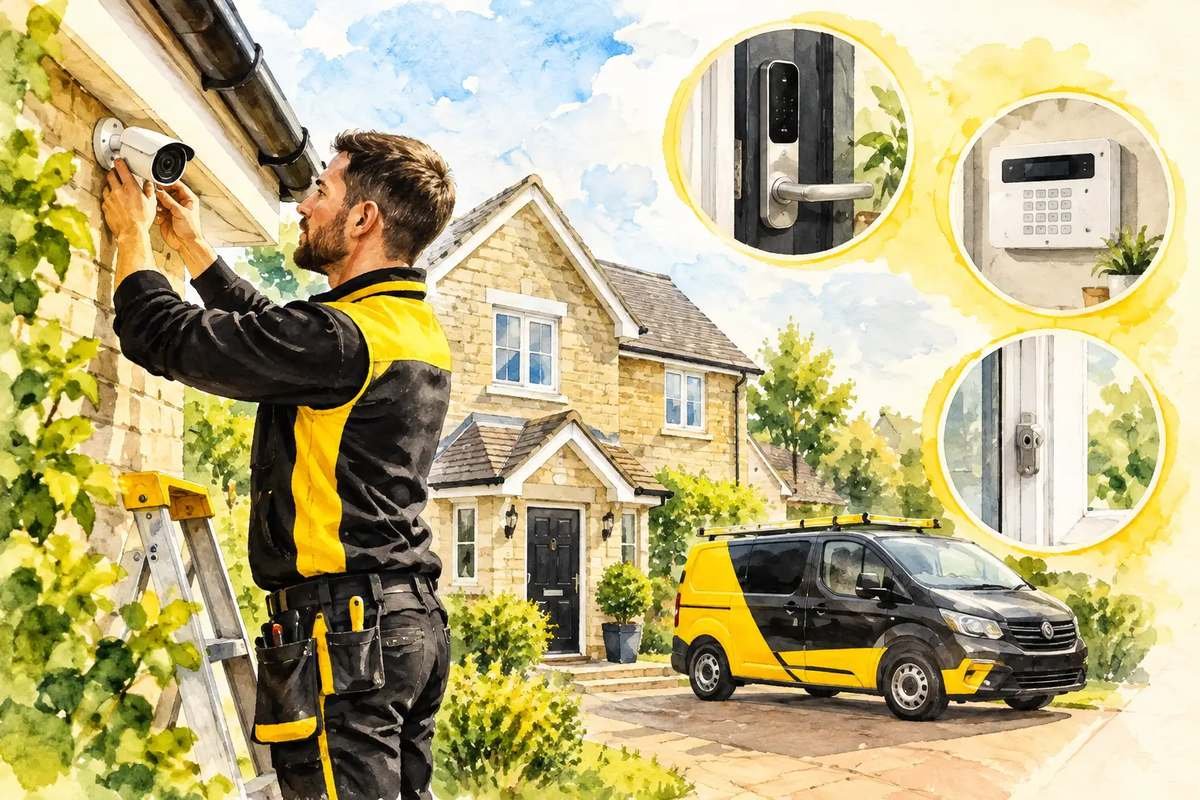
A front door that needs a shoulder to close, a window handle that spins without locking, or a side gate left on a tired hinge can seem like ordinary maintenance jobs. They are also the small details that can weaken home security. The good news is that most homes do not need dramatic changes to feel more secure. They need the basics checked properly, maintained and used consistently.
For homeowners, landlords and busy households, the sensible starting point is not buying the newest gadget. It is looking at how someone could realistically get into the property, what would make that easier than it should be, and which practical jobs have been put off for too long.
Start your home security check at the front door
Your front door is used every day, which means small alignment problems can build up slowly. If the door catches on the frame, has dropped on its hinges or only locks when you lift or pull it in a particular direction, the lock may not be engaging as intended. Do not get used to a door that is awkward to secure just because it still closes.
Check that the lock turns smoothly from inside and outside, where appropriate, and that the door closes without force. Look at the gap around the frame too. A consistent, sensible gap is normal; movement, visible damage or a loose frame is not something to ignore.
The letterbox, hinges and any glazing near the door deserve attention as well. Older fittings can become loose, and a door closer or latch that has worked its way out of position may affect both security and day-to-day use. A practical repair is often more useful than replacing parts at random.
If you have recently moved in, changing the locks is a straightforward way to know who has access. Previous owners, former tenants, cleaners, tradespeople and neighbours may all have been given keys in good faith over the years. This is not about assuming the worst. It is about starting with a clear record of who holds a key.
For landlords, lock changes should be handled carefully between tenancies and alongside a proper handover process. Keep a clear note of how many keys have been issued, which doors they operate and where any spare is held. A spare key hidden outside is convenient until it is not.
Do not overlook rear and side doors
Back and side doors are often less visible from the street, so they deserve the same attention as the front entrance. Check handles, locks, hinges, frames and the condition of any panels or glazing. Patio doors should slide, close and lock without excessive force. If they do not, the issue may be adjustment, wear or damage, but it is worth resolving rather than living with it.
A side entrance can also be weakened by the route leading to it. Overgrown shrubs, a broken gate latch or poor lighting can make a neglected area feel easy to approach unnoticed. You do not need to turn the garden into a floodlit compound. You do need to make sure the route is not inviting because basic upkeep has slipped.
Windows are a key part of home security
Window security is about more than remembering to shut them before leaving the house. A window that will not close properly, has a faulty mechanism or has a damaged handle needs attention, especially on the ground floor and in easily reached upstairs locations such as flat-roof extensions.
Go round the property and test windows one at a time. They should close into the frame properly and, where fitted, lock without a struggle. Keep keys somewhere safe and known to the household, but not left in the lock where they are visible or easily reached from outside. The right arrangement depends on the window and how it is used, so avoid creating a new problem by putting keys where nobody can find them in an emergency.
Condensation, swelling timber, loose catches and sticking hinges can all affect how a window closes. These are often maintenance issues before they become security issues. Repairing a faulty window mechanism can make the home safer and more comfortable at the same time.
Be realistic about ventilation. Leaving a window open while you are in another part of the house may be fine in some situations, but an open ground-floor window near a side path is different from a small, secure opening upstairs. Security is not one fixed rule. It is a judgement based on access, visibility and whether anyone is at home.
Make the outside work for you
A tidy exterior is not just about kerb appeal. It makes it easier to notice when something has changed and harder for access points to be hidden by neglect. Trim back vegetation that obstructs doors, windows, paths and gates, while keeping the garden pleasant to use. Repair loose fence panels and gate furniture before they become a route through rather than a boundary.
Outdoor lighting can be useful around entrances, paths and side passages. The aim is practical visibility when arriving home, taking bins out or checking the garden, not lighting up every corner all night. Positioning matters more than sheer brightness. Light should help you see steps, locks and gate latches without shining directly into neighbours' windows.
Think about the things left outside too. Tools, ladders and loose furniture can create opportunities as well as clutter. Put them away where possible and avoid leaving items that make reaching an upper window or forcing a gate easier. This is especially worth checking after a weekend of DIY or garden work, when it is easy to leave everything out with the intention of coming back to it tomorrow.
Everyday habits matter as much as hardware
Good locks cannot compensate for a door that has been left on the latch. Before bed or before going away, make a quick circuit of the usual points: external doors, accessible windows, keys, gates and outbuildings. It takes less time than making a cup of tea once it becomes routine.
Be careful with social media posts that advertise an empty house, particularly when holidays are underway rather than finished. It is also sensible to make the house look lived in when you are away. A trusted neighbour collecting post, moving a parcel from the doorstep or opening and closing curtains can be more useful than elaborate arrangements.
Deliveries are another routine weak point. If nobody is home, choose a safe delivery instruction rather than asking a parcel to be left in plain view. For flats and shared entrances, make sure communal doors close fully behind you and do not let unknown people tailgate through simply because they appear to be carrying a parcel.
Families should agree a simple approach to keys. Children old enough to carry one need to know not to label it with the home address, lend it out or leave it in a school bag unattended. Adults benefit from the same discipline, particularly where a keyring includes a work pass or anything identifying the address.
Plan repairs before the small faults become bigger ones
Home security is rarely improved by one dramatic purchase. More often, it comes from sorting a short list of ordinary jobs: a loose door handle, a lock change after moving, a gate that will not latch, a window mechanism that needs repair, or a frame that needs attention before winter makes it worse.
Walk around with a notepad and write down what you find. Separate urgent access issues from improvements that can wait, then group compatible tasks together. That makes arranging work simpler and gives the person doing it a clear picture before arriving. Photos and measurements can help with planning too, particularly for replacement hardware.
Some jobs are suitable for a capable homeowner, but there is no prize for struggling with a sticking lock or working at height when a safe repair is needed. If you are in Swindon and have a few related maintenance jobs to tackle, Handyman Plus Van can help assess practical repairs, lock changes and window mechanism issues in a planned visit. Clear information beforehand helps make the best use of the booked time.
The most reassuring home is not necessarily the one with the most equipment. It is the one where doors close properly, windows lock, keys are controlled and the small jobs are not left to become bigger worries.
Want to book?
I'm a one-man handyman service in Swindon — insured, DBS checked, and rated 4.9 on Google. 3-hour sessions cover Swindon (town); full days cover about 30 minutes around Swindon.
Book a session, or message me free on WhatsApp on 07729 689420. If you'd rather talk it through first, you can book a paid 20-minute video call.
