
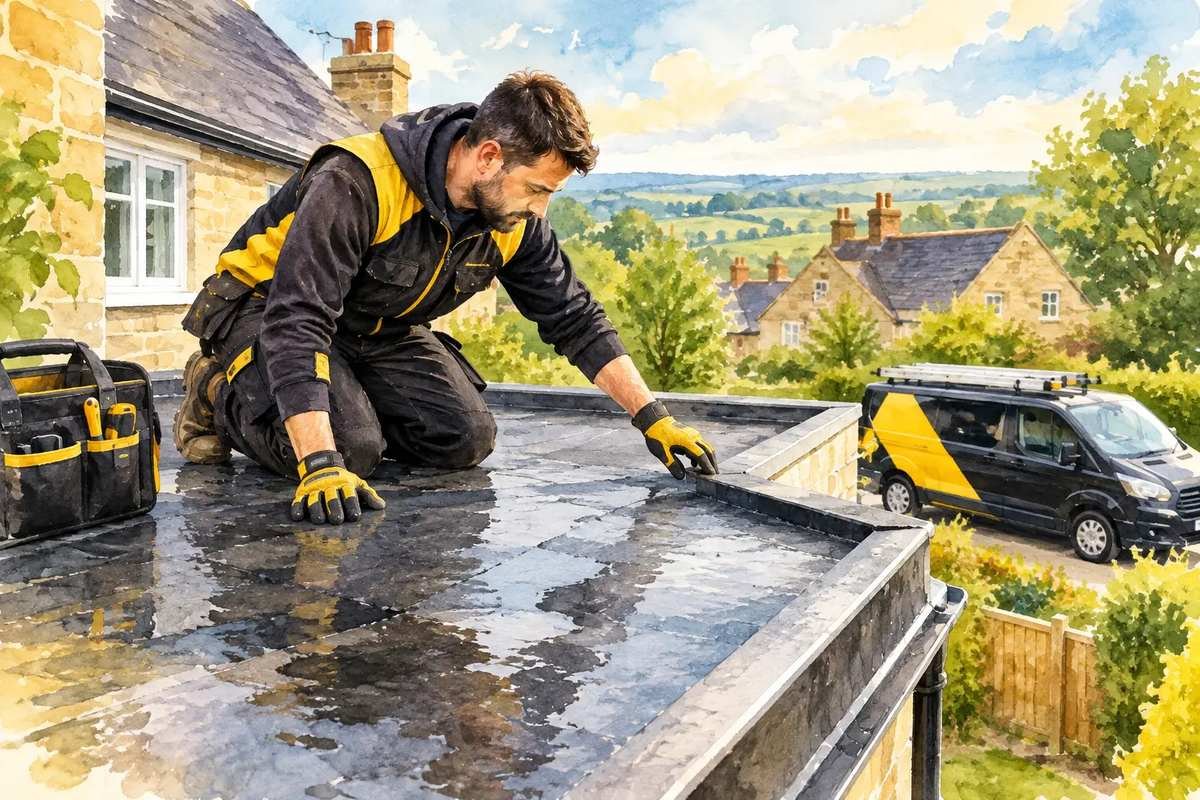
A small brown mark on an upstairs ceiling is rarely the start of the problem. With flat roofing, water can travel beneath the covering before it finds a way into the house. By the time a stain appears indoors, the damp area may be some distance from the actual defect.
That does not automatically mean a whole roof needs replacing. It does mean the roof deserves a calm, sensible inspection before a minor repair turns into damaged plasterboard, timber or insulation.
Flat roofing works best when water has somewhere to go
Despite the name, a flat roof is not truly flat. It should have a slight fall that guides rainwater towards an outlet, hopper or gutter. When water sits in the same place for days after rainfall, it is worth finding out why.
A shallow puddle does not always mean the roof is leaking. Some coverings tolerate a degree of standing water better than others, and older roofs are not always perfectly even. The concern is repeated ponding, especially where the surface is cracked, worn, blistered or pulling away at an edge. Standing water adds weight, keeps the covering wet for longer and exposes weak points.
The drainage route matters just as much as the roof surface. Leaves, moss and loose debris can block an outlet quickly. Overflowing gutters may also send water back towards the roof edge or down an external wall, creating a problem that looks like a roof leak but starts with poor drainage.
Early signs worth checking from the ground
There is no need to climb onto a roof to look after it. In fact, walking on an unsupported or ageing flat roof can damage the covering and create a real safety risk. Start with what can be seen safely from ground level, an upstairs window or a suitable access point.
Look at the roof after heavy rain. Water spilling over the guttering, vegetation emerging from an outlet, sagging around an edge or a visibly loose strip of covering all need attention. On a garage, porch, extension or dormer roof, examine the line where the roof meets a wall. This upstand and its flashing are common places for water to get behind the surface.
Indoors, watch for a new ceiling stain, peeling paint near an external wall, a musty smell or an area of plaster that feels softer than the adjacent ceiling. These signs can have several causes, including condensation or a plumbing-related leak, so it is better to investigate than guess.
Take a few photographs when you first notice an issue. A photo after rain, followed by one a week later, can help show whether water is drying out or spreading. It also gives a clearer picture when arranging a repair.
Common flat roof coverings — and what Handyman Plus Van works on
Many UK homes still have mineral-finished felt roofs. Age and weather take their toll: cracks at edges and upstands, brittle surfaces and blisters are common. I do not repair torch-on felt or other felt systems, and I do not work on pitched or sloped roofs. If your covering is felt and needs torch-on work or a full felt renew, that needs a roofing specialist.
EPDM is a rubber membrane commonly used on newer flat roofs. It has fewer seams than traditional felt and remains flexible, but its edges, trims and joints still need to stay secure. A puncture from sharp debris, careless work or stored items can let water beneath the membrane.
GRP, sometimes called fibreglass roofing, forms a hard, continuous surface. It can be a good option for the right roof, but it needs sound preparation and correct detailing at edges and joints. Fine cracking, failed sealant or movement around an adjoining wall may need attention before water reaches the deck beneath.
At Handyman Plus Van, flat roofing means small patch repairs and re-sealing on rubber (EPDM) or fibreglass roofs, within safe ladder reach (maximum ladder height 5 metres). The right repair depends on the covering, the age of the roof and the condition below it. A visible split may be localised. If the roof deck feels soft, the covering is lifting in several places or leaks keep returning, a patch alone may only delay a bigger job — and I will say so plainly.
Do not treat sealant as a permanent cure
Sealant has its place around trims, small gaps and certain junctions, but it is often used as a hopeful fix for a wider problem. Smearing mastic over wet, dirty or failing material can trap water rather than stop it. It may also make a proper repair harder to assess later.
The same applies to coating an entire roof without first dealing with splits, loose edges, poor falls or damaged decking. A coating may be suitable as part of a specified repair system, but it is not a universal answer in a tube or tin.
If a leak has appeared during wet weather, the first priority is limiting indoor damage safely. Move belongings away from the affected area, place a container beneath drips if needed and avoid disturbing a ceiling that is sagging with water. Once conditions allow, the roof can be assessed properly rather than patched in a rush.
Flat roofing maintenance is mostly about timing
A simple check twice a year is usually more useful than waiting for obvious damage. Spring is a good time to clear winter debris and check for movement after frost. Autumn is equally useful, before leaves and prolonged rain test the drainage.
Pay particular attention after strong winds. Wind can lift a loose edge or trim, and once water gets underneath a covering, it can travel further than expected. If branches overhang the roof, keep an eye on falling debris and repeated abrasion. Avoid using the roof as general storage, even if it looks convenient from an upstairs window.
For landlords, a documented seasonal check is sensible between tenancies or as part of planned maintenance. Tenants may notice indoor staining first, but they cannot be expected to identify a failing flashing or blocked outlet. Clear reporting and early inspection make the situation easier for everyone.
When a repair is realistic and when to plan further work
A small, clearly identified defect on an otherwise sound EPDM or fibreglass roof can often be repaired. Examples include a local split, a loose edge detail, a failed seal at a junction or a blocked drainage point that has caused water to back up — always within safe ladder reach. The condition of the substrate matters more than how neat the top surface looks.
Further work should be considered where there are several leaks, large areas of blistering, extensive cracking, a soft roof deck or recurring water ingress after previous patches. Felt roofs, torch-on systems and pitched roofs need a specialist. Those decisions need an honest assessment of the whole roof, not a sales pitch based on one damp patch.
Access affects what can be done safely. A repair that is straightforward on a low garage roof may be unsuitable where the approach is restricted, the surface is fragile or work would require unsafe access. A dependable tradesperson will say so plainly rather than take risks with your home or their safety.
Preparing for a flat roof visit
Useful information speeds up the first conversation. Note when the leak started, whether it follows heavy rain or wind, and where it appears inside. Photos of the roof from a safe position, plus photos of any ceiling marks, are helpful. If you know the roof covering (EPDM, fibreglass or felt) or roughly when it was last renewed, mention that too.
For smaller, safely accessible flat-roofing work on EPDM or fibreglass, a planned labour slot can typically be a practical way to deal with an inspection, minor repairs and related maintenance tasks on the same visit. Message me free on WhatsApp, or book a paid 20-minute video call if you'd rather talk it through. Larger or more extensive roofing projects typically take several sessions — or a specialist — and should be planned as a separate piece of work.
Do not wait for a ceiling stain to become a hole before acting. A clear description, a few safe photographs and an early check give you the best chance of keeping a manageable flat roofing issue just that — manageable.
Want it checked?
I'm a one-man service, insured and DBS checked, and rated 4.9 on Google. 3-hour sessions cover Swindon (town); full days cover about 30 minutes around Swindon. I'll do my best to get through your list in the time booked.
Book a session, or message me free on WhatsApp on 07729 689420. If you'd rather talk it through first, you can book a paid 20-minute video call.
