There is a familiar moment in a flat-pack build. The first panels are joined, and the bag of screws is one short. It is much easier to find that out now than halfway through.
This is a calm way through an IKEA wardrobe, a chest of drawers, or any similar kit: a few habits that stop a simple job turning into a weekend of frustration.
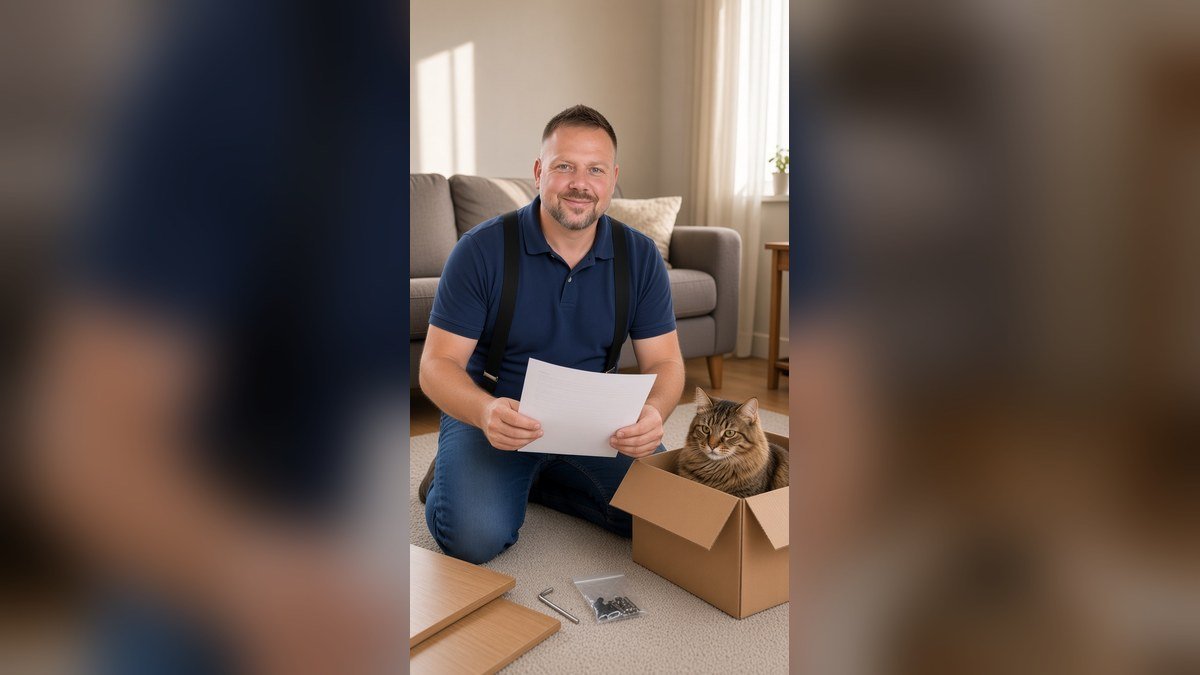
Image: AI-generated illustration of a handyman checking the parts and instructions before a flat-pack build.
Check the box and count the parts first
Before you pick up a screwdriver, tip everything out and check the box. Look at the panels for cracks, crushed corners or a finished face scuffed in transit. Then count the parts against the list in the instructions, including each bag of screws, dowels, cams and covers.
If something is missing or damaged, photograph it and contact the shop before you carry on. Once you have started, it can be harder to show what arrived in the box.
Clear the space
Give yourself a clear floor, with room to lay the panels flat. A carpet can swallow a small screw in seconds. A sheet of cardboard from the box, or a blanket, protects the finished faces from scratches. Keep cups of tea, pets and trailing cables out of the way.
Read the instructions through
It is tempting to skip ahead and start fitting pieces together. Don't. Read the instructions all the way through once, before the first cam lock is tightened.
Look for the order of steps, which way a panel faces, and any moment where a piece will be impossible to fit if you have already closed up the carcass. The back panel is often what keeps a wardrobe or cupboard square, and it is a misery to add later.
Lay out and sort the fixings
Tip the bags into a tray or a shallow bowl so the little bits cannot wander off. Sort them by type: dowels, cam locks, cams, screws of each length, hinges, handles and covers.
Do not mix up the screws. A screw that is too long can burst through a finished face. A screw that is too short will not hold a hinge or a rail. If two look similar, check them against the drawing first.
Use the right tools
Most kits include an Allen key. Use it, and have a screwdriver that actually fits the heads, a tape measure and a spirit level to hand. A soft mallet, or a scrap of wood, helps if you need to tap a dowel home.
A powered driver can help on long runs of screws, but keep the torque low. For cam locks and light metal fittings, which are easy to strip, a hand screwdriver is kinder.
Don't overtighten the cam locks
Cam locks should be firm, not forced. Tighten until the joint closes and the fitting feels snug, then stop. Leaning on it for luck is how a cam strips in the chipboard, and there is no good way to undo that.
Build the piece as square as you can as you go. Fit the back panel properly, as the instructions show, before the final tightening all round. That last pass is for lining everything up, not for forcing earlier mistakes.
Get a second person for tall or heavy items
A low bedside table is usually a one-person job. A wardrobe, a tall bookcase or a heavy chest is not, even if the pictures on the box make it look simple.
Ask someone to help you stand the unit up, steady a side panel, or guide the piece into place. Trying to catch a falling carcass on your own is how panels crack, floors get marked, and backs get strained.
Wall-anchor tall furniture
If a unit is tall, narrow, or could tip, fix it to the wall. Use the strap or bracket the maker supplies, and use wall fixings that suit the wall behind it.
Most interior walls in Swindon homes are plasterboard on a frame, or masonry (brick or block). A plasterboard anchor will not hold properly in brick. A masonry plug needs a solid wall, not a hollow plasterboard cavity. If you are not sure, tap the wall: a hollow sound is often plasterboard.
Before you drill, check for pipes and cables, and avoid a neat line up or down from a socket, tap or radiator. If you cannot tell what is behind the surface, do not drill. A wardrobe or chest that can tip is a real danger, especially in a child's room.
When to stop
Stop if a panel arrived damaged, or a bag is short, and speak to the shop first. Stop if a joint will not close without force, a cam has already stripped, or more tightening is not making the unit square. Forcing it usually makes a mess of the chipboard.
Stop if you cannot safely stand the piece up, or you are not confident about the wall fixings for a tall unit. There is no prize for finishing a build that is unstable. Wipe the finished piece with a slightly damp cloth, not a flood of water, and dry it. Swollen chipboard does not recover.
Getting a hand in Swindon
If you would rather not spend the day on the living-room floor, I can assemble flat-pack furniture for you. I'm Ian, and I run Handyman Plus Van. I am a Swindon handyman, insured and DBS checked, and I work in Swindon only.
Book online at handymanplusvan.co.uk, and list your items upfront so I know what is being built. If you have a question about the job, message me on WhatsApp on 07729 689420.
I work alone, and I will not lift items over 15 kg. If a piece is heavy, you will need to arrange a helper for the lifting.
Handyman Plus Van is a trading name of Ian Croasdell, sole trader.