
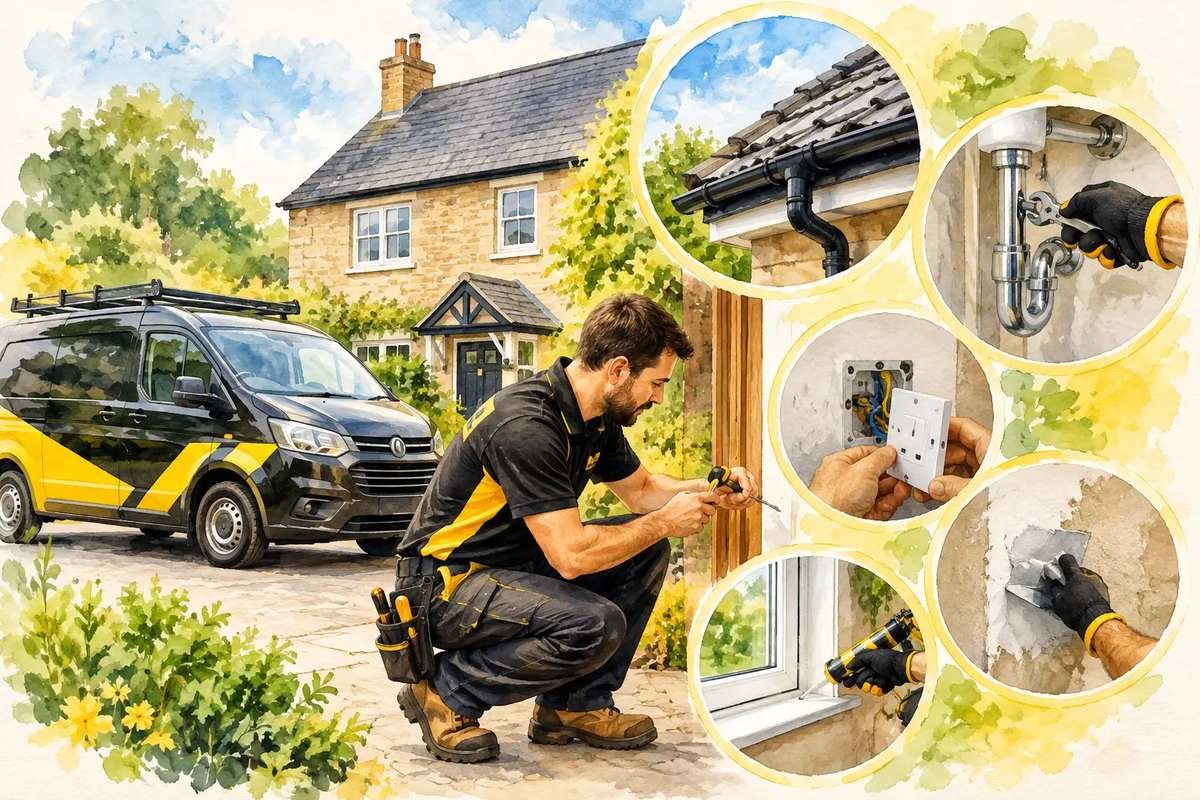
A loose handle may be annoying. A leaking pipe beneath a kitchen sink, a door that will not lock properly or water finding its way through a flat roof is a different matter. The five landlord repair priorities below give private landlords a sensible order for deciding what needs attention first, rather than allowing a growing list of small jobs to become a costly problem.
The right order will vary slightly from property to property. A well-kept flat with reliable tenants may need mostly preventative maintenance, while an older house between lets may reveal several issues at once. The useful rule is simple: deal first with anything that could affect safety, security, water damage or a tenant's ability to use the home normally. Cosmetic improvements can wait their turn.
The five landlord repair priorities, in order
1. Stop water getting in or escaping
Water damage is rarely confined to the place where it first appears. A small leak under a basin can swell cupboard panels, damage flooring and encourage mould. Staining on a ceiling may point to a problem above it, while failed sealant around a bath or shower can gradually damage the wall behind the tiles.
Start by checking the obvious areas: kitchen and bathroom pipework, taps, traps, silicone seals, toilet fixings, shower screens, window surrounds and any flat-roof section. Look for drips, staining, soft boards, musty smells, lifting flooring and peeling paint. Tenants often notice these signs early, so a report of a slow leak is worth treating seriously even if the room still appears usable.
The repair itself depends on the cause. It may be as straightforward as renewing sealant, replacing a worn trap, securing a loose fitting or repairing a localised flat-roof defect. Sometimes the visible issue is only a symptom, and further investigation is needed before work starts. That is why photographs, a clear description and access to the affected area save time.
Do not be tempted to paint over staining before the source is resolved. It can make a property look presentable for a short while, but trapped moisture and recurring marks soon give the game away. Drying the area properly and fixing the cause is the better investment.
2. Keep doors, windows and access points secure
A rental property needs to feel secure on the day a tenant moves in and throughout the tenancy. Sticking doors, worn locks, damaged frames and failed window handles are not just inconveniences. They can affect a tenant's confidence in the property and leave a home vulnerable if ignored.
Between tenancies, check every external door opens, closes and locks without force. Test handles, hinges, letter plates, chains and catches. Make sure windows close properly and that their handles, restrictors and locking mechanisms work as intended. A window that will not shut can also allow rain into the property, so this priority often overlaps with preventing damp.
Lock changes are particularly sensible when there is any uncertainty over who may still have a key. Keep a simple record of what was changed and when, along with the number of keys supplied. For landlords managing several properties, this small bit of organisation avoids confusion later.
Not every security issue has the same fix. A misaligned door may only need adjustment, whereas damaged timber around a lock may need a more considered repair. Address the underlying cause, rather than repeatedly forcing a lock that is binding.
3. Tackle damp, mould and failed finishes before they spread
Damp is one of the most misunderstood maintenance problems in rented homes. Condensation, penetrating water, leaking plumbing and poor seals can all create similar-looking marks, but they need different responses. Simply adding a coat of stain-blocking paint may hide the evidence without improving the room.
Check behind furniture where practical, around window reveals, inside cupboards on external walls, near showers and baths, and in corners with limited air movement. Look for black spotting, bubbling paint, flaky plaster, a persistent musty smell or timber that feels soft. Ask tenants what they have observed and when it first appeared. A pattern after heavy rain, for example, tells a different story from moisture concentrated around a shower.
Once the cause is identified, repair it before redecorating. That might mean improving seals, dealing with a local source of water ingress, repairing affected surfaces or carrying out appropriate damp-proofing work. Allowing time for the area to dry matters as much as the repair itself.
There is a practical balance here. Tenants should be able to use kitchens and bathrooms without worrying that ordinary daily living will ruin the property. At the same time, good ventilation and sensible use of extractor fans help. Clear, respectful communication is more useful than blame. Explain what is being repaired, what needs time to dry and what the tenant can reasonably do to keep the area in good condition.
4. Repair the jobs that affect normal day-to-day use
Once the property is dry and secure, focus on fittings that make daily life needlessly difficult. These are the jobs tenants notice every day: a toilet seat that will not stay secure, a kitchen cupboard door hanging loose, damaged silicone around a bath, broken tile edges, a sagging curtain pole or a shower screen that no longer closes correctly.
Individually, these repairs may seem minor. Together, they shape a tenant's impression of how the property is managed. They can also create more expensive work if left too long. A loose kitchen hinge can pull screws from a cabinet side; a failed bath seal can lead to water damage; a cracked tile may expose the surface beneath it to moisture.
This is where a planned maintenance visit can work well. Rather than arranging separate appointments for every small task, make one clear list and group compatible jobs. Include the room, the fault, how long it has been present and a photo where possible. A three-hour or six-hour labour slot can be a practical route for a collection of defined repairs, provided the work is suitable and materials are available.
Be realistic about what can be completed in one visit. Hidden damage, drying time, matching materials and access can change the scope. A good repair is not improved by rushing it just to clear a list.
5. Protect condition and presentation between tenancies
The final priority is the work that preserves the property's condition and makes it ready for the next occupant. This includes touch-up painting where it is genuinely needed, repairing scuffed woodwork, re-fixing loose fittings, refreshing tired sealant, replacing damaged handles and making good small areas after repairs.
This is not just about appearance. A tidy, maintained home is easier to inspect, easier to let and less likely to conceal developing problems. Fresh paint will not compensate for damp or poor security, but once the essentials are sound it can protect surfaces and set the right standard for the next tenancy.
Avoid treating every void period as a full refurbishment. Spend where the condition calls for it. If walls are generally sound, targeted making-good may be enough. If a bathroom has repeated sealant failures and worn finishes, a more planned refresh could be better value than patching the same area several times.
Keep photographs and a short record of completed work. This helps with future inspections, gives tenants confidence that reports are acted on and makes it easier to spot repeat faults. It also stops small repair decisions being made from memory alone.
A practical way to plan the work
Before booking anyone, walk through the property room by room and write the list in priority order. Put water, security and damp-related items at the top. Next, include faults affecting everyday use. Leave decorating and presentation jobs until last, unless they are needed after a repair has been completed.
For occupied properties, agree access properly and give tenants enough notice. Ask them to clear the immediate work area where possible, but do not expect them to diagnose the problem. A clear photo and plain description such as “water appears in the cupboard after using the sink” is often all that is needed to start planning.
For Swindon landlords with several smaller, clearly defined jobs, Handyman Plus Van offers a straightforward way to consolidate a maintenance list with one named, insured professional. Larger or more involved refurbishment work typically needs several booked sessions. Message me free on WhatsApp, or book a paid 20-minute video call if you'd rather talk it through.
The best maintenance routine is not the one with the longest checklist. It is the one that catches water, security and wear before a tenant is inconvenienced and before a modest repair turns into a larger bill. Start with the fault that can do the most damage, then work steadily down the list.
Want to book?
I'm a one-man handyman service in Swindon — insured, DBS checked, and rated 4.9 on Google. 3-hour sessions cover Swindon (town); full days cover about 30 minutes around Swindon.
Book a session, or message me free on WhatsApp on 07729 689420. If you'd rather talk it through first, you can book a paid 20-minute video call.
