
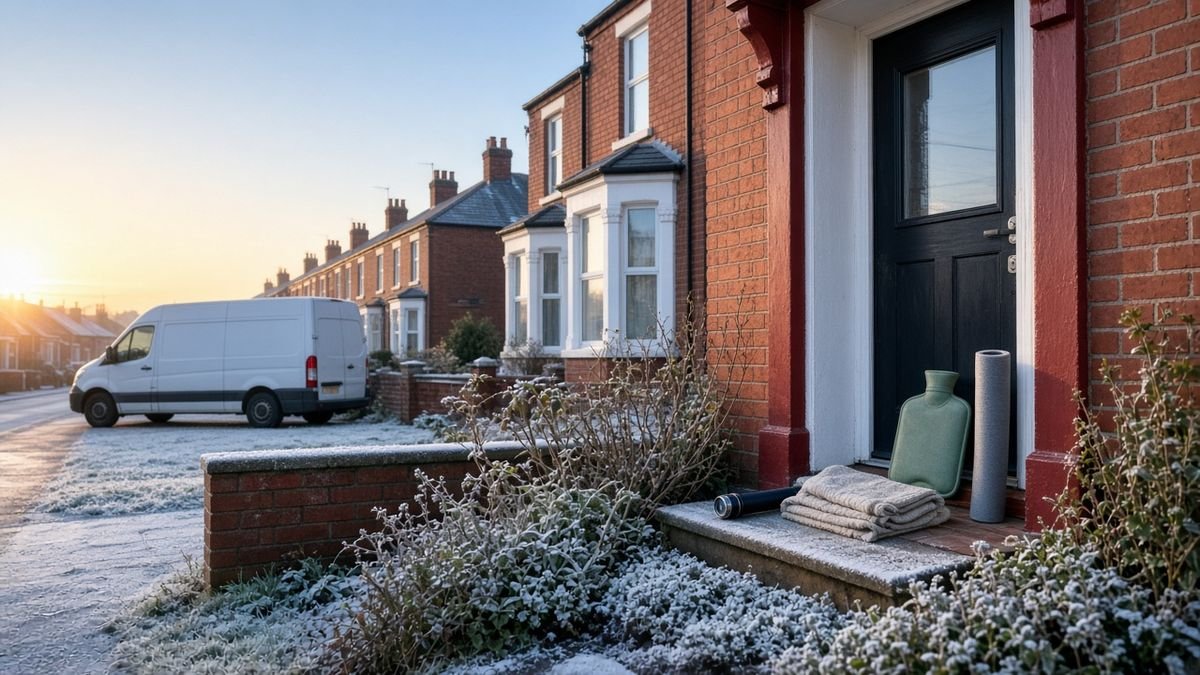
Frosty nights are on the way, and winter is when Swindon homes find out whether their plumbing has been quietly waiting for a chance. The cheapest bit of preparation you can do costs nothing and takes about five minutes: find your stop tap and make sure it works.
Why the stop tap matters
The stop tap (or stop valve) controls the mains cold water coming into your home. If a pipe splits, turning it off is what stops a small leak becoming a ruined ceiling. The trouble is that many people only go looking for it once the water is already running.
Step 1: Find it
Thames Water, who supply Swindon, say the stop tap is usually under the kitchen sink. If it isn't there, check:
- under the stairs or near the front door
- the airing cupboard or beside the boiler
- the garage or utility room
- anywhere a pipe comes up through the floor
There is usually a second valve outside under a small cover near the boundary, but the one inside is the one to know in an emergency.
Step 2: Clear the way
A stop tap you can't reach is not much use. Move cleaning bottles, bags and boxes so you can get a hand to it quickly, even in the dark. Keep a torch somewhere obvious nearby.
Step 3: Test it
- Turn it clockwise to close. A lever type usually needs a quarter turn and is off when the lever sits across the pipe.
- Run the kitchen cold tap and check it stops.
- Turn the stop tap back on fully, anticlockwise.
- Look for any drips around the valve.
If it is stiff or seized, don't force it with grips. Old valves can break or start leaking, and that turns a test into an emergency. Get a plumber to look at it.
Step 4: Protect the pipes that freeze first
Pipes in lofts, garages and on outside walls are the ones most at risk. Lagging exposed pipework and dealing with the outside tap before a hard frost makes a burst much less likely.
Step 5: Know the first moves if a pipe bursts
Thames Water's advice is to turn off the stop tap, turn off the heating, open the taps to drain the system, soak up what you can with towels, and contact your insurer and a plumber. If water is near sockets, lights or the fuse box, don't touch anything wet. Only switch off at the consumer unit if you can reach it safely and dry; otherwise keep clear and call a qualified electrician. Electrical Safety First has guidance on water and electrics, and the full advice is on Thames Water's frozen or burst pipes page.
Where Handyman Plus Van fits in
I'm Ian, and I run Handyman Plus Van in Swindon. I'm insured and DBS checked, and I work in booked sessions from a clear job list, so you know what's being tackled. Small plumbing jobs like dripping taps and kitchen sink problems are the sort of thing that fits well into a 3-hour or full-day session, and I'll do my best to get the list done in the time booked. Anything that needs a plumber or a Gas Safe engineer, I'll tell you straight.
Ready to get a few winter jobs ticked off? Make a booking or message me free on WhatsApp on 07729 689420. For a lighter, step-by-step version of this, see my blog post Where Is My Stop Tap?
