
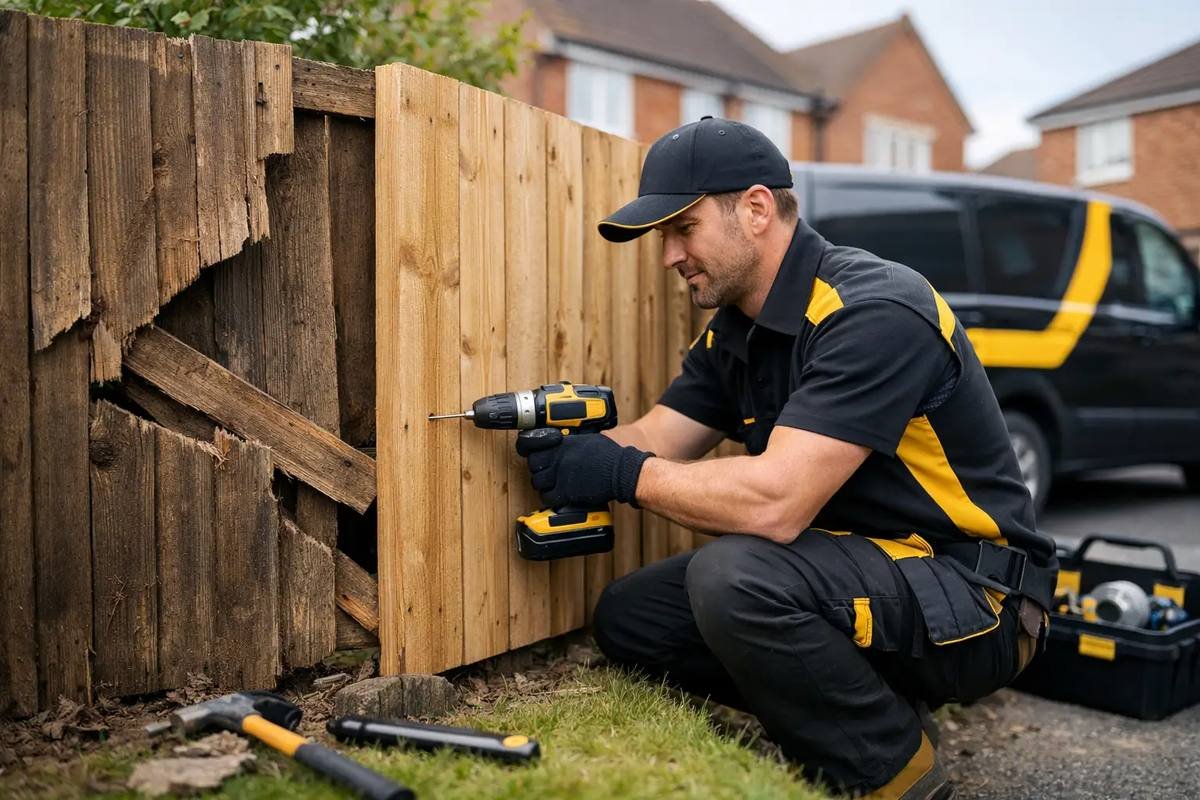
A leaning fence panel can make the whole garden feel untidy, but the visible problem is not always the part that has failed. A fence repair handyman Swindon homeowners call out will look beyond the loose panel: the post may be moving in its footing, a rail may have split, or a previous quick fix may simply have reached the end of its life.
For homeowners, landlords and property managers, the aim is usually straightforward: make the boundary safe, secure and presentable without turning a manageable repair into a bigger job than it needs to be. The right approach depends on what is damaged, how the fence was built and whether the surrounding structure is still sound.
Start with the cause, not just the symptom
Stormy weather often gets blamed for fence damage, and sometimes that is fair enough. Strong gusts put real pressure on panels and posts. However, wind normally exposes a weakness that was already there. Timber posts rot where they meet the ground, concrete posts can loosen in poor footings, and old fixings can work free over time.
A panel that has fallen out of place may only need refitting and more secure brackets. If the rails behind it have failed or the post has started to lean, replacing the panel alone will not solve much. It may look better for a week, then move again at the first spell of bad weather.
That is why a quick inspection matters. It helps separate a contained repair from a section that needs more attention, and avoids spending money twice on the same problem.
Common fence repairs that may be worthwhile
Small and medium fence repairs can often extend the life of an existing run, especially where most of the boundary remains solid. A repair may be suitable when one or two panels are damaged, fixings have failed, a gate has dropped out of alignment, or a timber rail needs replacing.
Posts deserve particular attention. A sound post with a loose fixing is usually a more straightforward job than a post that is rotten, cracked or unstable at ground level. The same applies to timber panels. Surface weathering can be dealt with, but soft, crumbling timber has lost its strength and may not hold a reliable repair.
It is also worth checking the gate while looking at the fence. A sagging gate can strain its hinges, pull against the closing post and eventually damage nearby sections. Adjusting or repairing it early is often simpler than waiting until it no longer shuts properly.
When a repair is the sensible option
Repair generally makes sense when the damage is localised and the surrounding posts, rails and panels are in decent condition. It is a practical choice for a broken panel after high winds, loose trellis, tired hinges or a fence section knocked out of line.
Matching materials matter here. Older fence panels do not always match what is readily available now, and a replacement can look noticeably different in height, colour or style. That does not necessarily rule out a repair, but it is worth deciding whether function or a uniform finish matters most to you.
When replacement may be better value
If several posts are failing, multiple panels are rotten, or the whole run is leaning, piecemeal repair can become false economy. Replacing one weak section beside several more that are close to failing may leave you with repeated disruption and several separate visits.
A larger replacement project needs proper planning. Access, materials, the condition of the ground and the length of fence all affect the scope. If the work goes beyond a straightforward handyman repair, it is better to discuss it honestly from the start rather than force a large project into a small-job booking.
Check ownership before work begins
Before arranging fence work, make sure you know which boundary you are responsible for. Do not rely on the old idea that the fence on a particular side of a garden automatically belongs to a certain property. That is not a rule.
Your title plan, deeds or information from your solicitor may help, although boundaries are not always marked clearly. In a rented property, landlords should check tenancy responsibilities and any existing agreements with neighbours. Where a fence is shared or its ownership is unclear, a quick conversation with the neighbour can prevent an awkward dispute later.
This is especially useful where matching panels, access from the adjoining garden or work close to a shared boundary is involved. A polite heads-up is usually easier than explaining a changed fence after the fact.
Prepare a clear job list for your visit
Good preparation keeps a fence repair visit focused. Take a few clear photographs from both sides where possible, including the base of any leaning post and the fixings around damaged panels. Note roughly how many sections are affected and whether there is access through the house, side passage or garden gate.
If you are booking other household jobs at the same time, put them all in one list. That might include a sticking gate latch, loose shed door catch, garden trellis or another small maintenance task. Combining suitable jobs into one planned visit can be more convenient than arranging separate appointments for each item.
Message me free on WhatsApp, or book a paid 20-minute video call if you'd rather talk it through. It is not a substitute for seeing every hidden issue on site, but it gives everyone a clearer starting point.
What affects the time needed for fence repairs?
Fence work is often described as a simple job, but the time can vary considerably. Replacing a panel in an accessible garden is very different from dealing with a loose post behind a narrow side passage, overgrown planting or awkward levels.
The condition of existing work makes a difference too. Old screws may be seized, brackets may be bent, and a fence that has moved for years can place unexpected pressure on nearby sections. Sensible repair work includes checking that the repaired section sits properly with the rest of the run, not just fastening the most obvious loose piece.
Weather can also affect the schedule. Wet ground, high winds and poor visibility are not good conditions for working safely around unstable fencing. There is no benefit in rushing a job that needs a steady, safe approach.
Choosing a fence repair handyman in Swindon
The useful question is not simply, “Can someone put this panel back?” It is whether the person attending will explain what has failed, work tidily and be clear about the limits of the job.
With Handyman Plus Van, you deal directly with Ian - the man, the van and the toolbox. That means one DBS-checked, insured professional who can assess the task, carry out suitable repairs and communicate clearly if the fence condition points towards a larger project instead. No judgement, no drama, just a reliable pair of hands for the work that fits the service.
A tidy finish matters, but so does avoiding a repair that creates another problem. A panel should be secure, a gate should close properly, and no one should be left guessing what has been done or what may need attention next.
If your fence has started to lean, rattle or come apart, take a few photos before it worsens. A clear description and a realistic view of the damage make it much easier to plan the right visit - and to get the garden boundary back to feeling like part of a well-kept home.
Want to book?
I'm a one-man handyman service in Swindon — insured, DBS checked, and rated 4.9 on Google. 3-hour sessions cover Swindon (town); full days cover about 30 minutes around Swindon.
Book a session, or message me free on WhatsApp on 07729 689420. If you'd rather talk it through first, you can book a paid 20-minute video call.
