
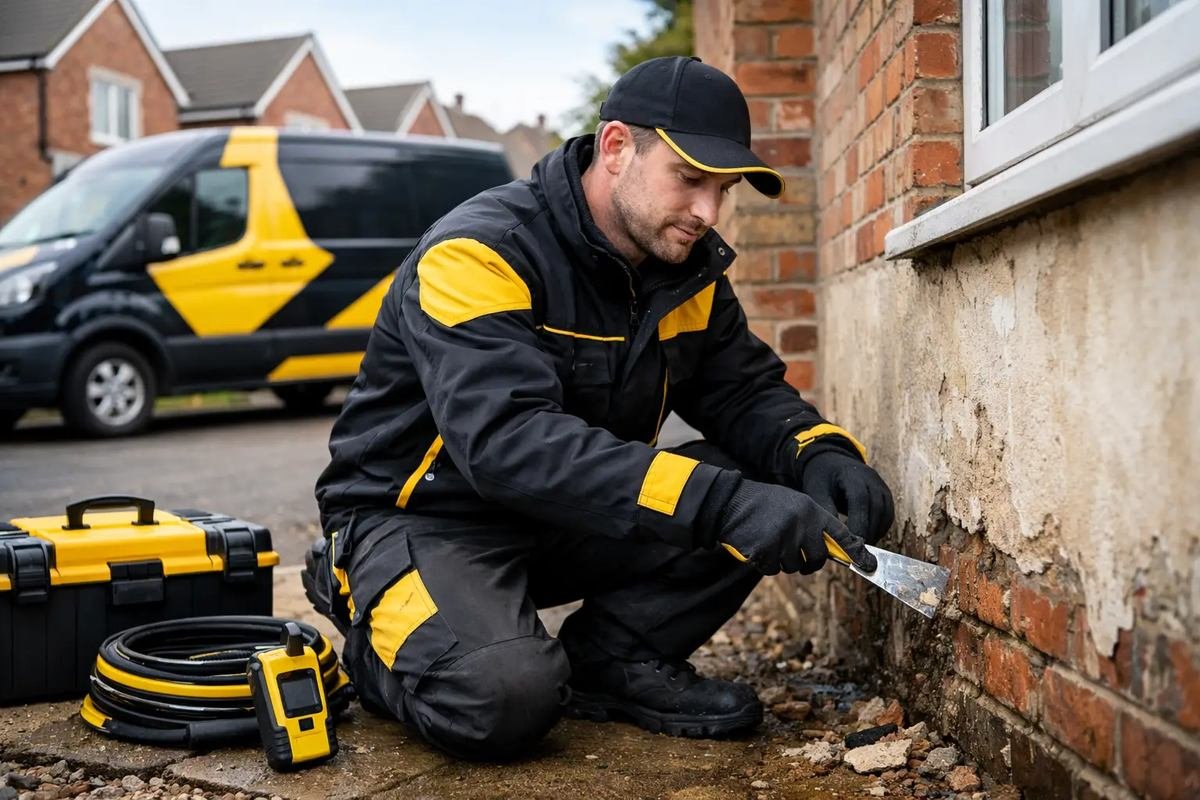
A brown patch above a skirting board, paint that keeps bubbling, or a musty smell in a spare room can make any homeowner worry about damp. Damp proofing repairs Swindon properties need are not always about applying a coating to a wall. The useful first step is finding out where the moisture is coming from. Fix the cause, then repair the damage properly. That is how you avoid paying to redecorate the same patch twice.
For many homes, the answer is smaller and more practical than people expect: a leaking pipe joint, failed sealant around a bath, damaged mortar, a blocked gutter or poor ventilation. Other situations need a more detailed damp survey and specialist remedial work. There is no judgement and no drama - just a sensible look at the evidence before work begins.
Damp is a symptom, not a diagnosis
Damp shows itself in different ways, and the location matters. A patch on a ceiling below a bathroom may point to a plumbing-related leak or failed silicone around a shower tray. Marks around a window can be caused by condensation, a failed seal, or rain getting through an external defect. Damp at low level on an internal wall might be linked to a bridging issue, a leak, or another moisture source that needs checking before anyone recommends treatment.
This is why simply painting over stains is rarely a lasting repair. Stain-blocking paint can be useful after the underlying issue has been fixed and the area has dried, but it is a finishing job, not damp proofing.
A good repair starts with a few plain questions. Has the patch appeared after heavy rain? Is it worse in winter? Is there a bathroom, kitchen, radiator pipe or outside wall nearby? Are windows regularly wet with condensation in the morning? The answers help narrow down the likely cause and prevent guesswork.
The common causes found in Swindon homes
Swindon has a broad mix of housing, from older solid-wall homes to modern estates and rented flats. The building age changes the likely construction, but damp still usually comes down to moisture entering, escaping or being trapped where it should not be.
Condensation from everyday living
Condensation is especially common in bedrooms, bathrooms, kitchens and behind large furniture placed tightly against external walls. Warm, moist air meets a cold surface and turns into water. You may see black mould around window reveals, in corners, behind wardrobes or on bathroom ceilings.
The repair is often a combination of cleaning affected surfaces safely, improving extraction, keeping background ventilation clear and dealing with failed sealant or local decoration damage. Heating patterns and drying clothes indoors can also play a part. It depends on the household, the room and how well the property is ventilated.
If mould returns quickly despite reasonable ventilation, it is worth checking for another moisture source rather than assuming it is all condensation.
Water getting in from outside
Penetrating damp often becomes more obvious after rain. It can result from cracked pointing, gaps around frames, defective external seals, overflowing gutters or a problem where an external wall meets a flat roof or extension.
The important point is access and scope. A small, safely accessible repair may be straightforward. Work at height, widespread wall defects or issues needing specialist equipment should be assessed and planned properly rather than rushed. Safe access always comes before a quick fix.
Leaks from plumbing or bathroom areas
A slow leak can cause a surprising amount of damage before it becomes obvious. Loose traps, worn seals, failed grout, leaking waste connections and drips hidden inside a vanity unit can all leave damp patches on adjacent walls, ceilings or flooring.
These jobs often reward early action. Replacing tired sealant, resealing a shower enclosure, repairing a minor plumbing-related fault, or renewing damaged panels can stop a small problem becoming a larger refurbishment. Once the leak is resolved, the area needs time to dry before patching, painting or fitting new finishes.
Low-level damp and damaged plaster
Damp close to floor level needs particular care. It is tempting to call every low-level mark rising damp, but that is not a diagnosis. External ground levels, blocked air bricks, leaking pipes, previous alterations and salts in old plaster can all affect what you are seeing.
Where there is a genuine need for a specialist damp-proof course or extensive replastering, a proper survey is the right route. For localised repairs after the cause has been identified - such as removing loose material, making good a small area and redecorating once dry - the work can be planned as part of a wider maintenance visit.
What a sensible repair plan looks like
The best order of work is usually simple. First, stop the moisture. Second, allow the affected materials to dry. Third, repair damaged surfaces. Finally, improve the conditions that allowed the issue to develop where possible.
Drying is not an inconvenience to skip. Plaster, timber and masonry can hold moisture for some time, even after a leak has been repaired. Filling and painting too soon can leave you with peeling paint, staining or mould returning beneath a fresh finish. A moisture check and a bit of patience can save a repeat visit.
For a small bathroom issue, the plan might involve finding the failed seal, removing old silicone, cleaning and preparing the area, resealing it neatly, then dealing with any minor decorative damage after drying. For rain-related staining, it may mean inspecting accessible external details first, completing the appropriate repair, and only then making good the internal wall.
This approach is less dramatic than a one-product answer, but it is far more useful for a home that needs to stay dry.
When to book a handyman and when to seek a survey
A dependable handyman is a good fit for clearly defined, small-to-medium repairs: renewing sealant, addressing accessible minor defects, making good damaged plaster, repairing local decoration, checking obvious plumbing-related issues and tackling several connected maintenance jobs in one visit.
A specialist survey is more appropriate when damp is widespread, structural timbers may be affected, the same issue keeps returning without a clear source, or a property may need a formal diagnosis for insurance, sale or landlord records. It is also the sensible choice where work falls outside safe access limits or needs a specific damp treatment system.
There is value in being clear about that boundary. It protects the property and stops homeowners spending money on a repair that does not match the problem.
Make the visit count
If you have a few jobs alongside the damp repair, write them down before booking. A loose shower screen, failed bath seal, peeling paint in the hall and a sticking window mechanism may be separate annoyances, but grouping suitable tasks can make better use of a booked labour slot.
Take clear photographs of the affected area, including a wider shot showing where it sits in the room. Note when it first appeared, whether it changes after rain or showers, and whether you have already tried any repairs. This gives a clearer starting point and helps decide whether a three-hour or six-hour visit is likely to be suitable.
Message me free on WhatsApp, or book a paid 20-minute video call if you'd rather talk it through. For larger repair or refurbishment work, booking several sessions is typically more appropriate than trying to force it into a single standard booking.
A dry wall starts with the right question
Damp can look worrying, but it does not always mean a major project. Start with the cause, be realistic about drying time, and do not cover up a problem that has not been fixed. For practical damp proofing repairs in Swindon, a calm inspection and a well-planned repair are often the quickest route back to a clean, comfortable room.
Want to book?
I'm a one-man handyman service in Swindon — insured, DBS checked, and rated 4.9 on Google. 3-hour sessions cover Swindon (town); full days cover about 30 minutes around Swindon.
Book a session, or message me free on WhatsApp on 07729 689420. If you'd rather talk it through first, you can book a paid 20-minute video call.
